Kochi: The Queen of Arabian Sea and Its Enduring Maritime Legacy
This southern city has historically been known as Cochin, and it has fully justified its regal title. Can you guess which city we're talking about? It's Kochi, often called the Queen of the Arabian Sea, situated on India's southwest coast in Kerala.
The city earned this majestic title because of its strategic coastal position and its centuries-old role as one of the most important maritime trading hubs in the Indian Ocean region. Kochi's history spans from ancient spice routes through colonial power struggles right up to modern infrastructure achievements, all deeply connected to the sea that shaped its destiny.
A Port City Shaped by the Sea
Kochi's rise began long before modern nation-states existed. Its protected harbor and proximity to the spice-growing Western Ghats made it a natural gathering point for traders sailing from Arabia, Persia, China, Africa, and later Europe. Even before Europeans arrived, Kerala's coast saw ships loaded with pepper and other spices, linking the region to distant markets.

The ancient port of Muziris, located nearby, traded with Romans and West Asian kingdoms. Kochi inherited this maritime legacy as trade routes evolved over time. This continuous global contact established Kochi's reputation as a gateway between East and West.
Colonial Crossroads of the Arabian Sea
Kochi gained greater significance during the early 16th century. In 1503, the Portuguese established their first colony in India here, marking a new phase in colonial history on the subcontinent. The fort they built stands as evidence of European ascendancy when European nations dominated the spice trade completely.
The Dutch took control in 1663, followed by British influence, while the Kingdom of Cochin continued as a princely state under British rule. Each colonial phase left architectural, cultural, and administrative imprints, creating a layered city where European churches, synagogues, mosques, and temples coexist within walking distance.
Gateway to the Global Spice Trade
Kochi's royal epithet remains closely tied to spices. Pepper, cardamom, cinnamon, cloves, and nutmeg traveled from Kerala's hills to Kochi's docks before being shipped worldwide. For centuries, this trade connected India to Europe, the Middle East, and Southeast Asia, influencing global cuisines and economies.
Kerala still leads India in spice production, supplying most of the country's black pepper while dominating cardamom and nutmeg markets. Kochi's port served as the central export point for these valuable goods, strengthening the city's wealth and maritime status. This connection earned Kerala the broader nickname "the Spice Garden of India," with Kochi serving as its strongest coastal anchor.
Modern Innovations and Global Recognition
Despite its historical roots, Kochi functions as anything but a museum city today. It serves as Kerala's financial, commercial, and industrial capital while achieving several national and global firsts that highlight its forward-looking character.
The city boasts India's only water metro system, an electric boat-based network connecting islands and suburban areas. Cochin International Airport became the world's first solar-powered airport, demonstrating Kochi's commitment to sustainable infrastructure initiatives. The city has also experimented with seaplane service, marking another significant achievement.
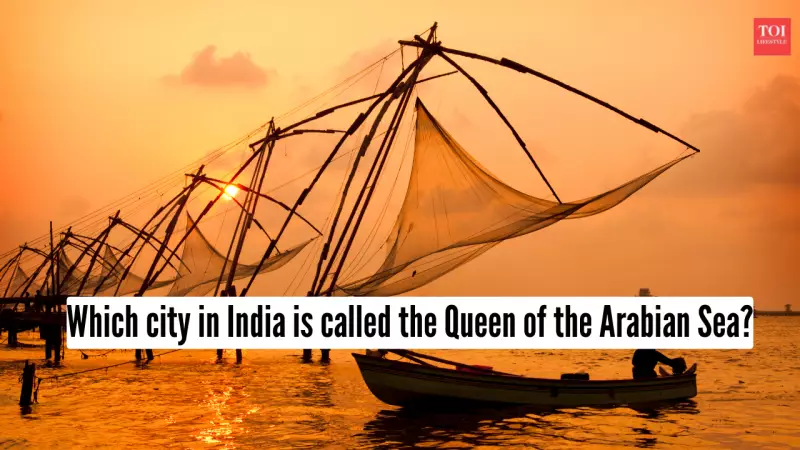
Kochi's cultural scene matches the intensity of its seafaring history. In 2012, it launched the Kochi-Muziris Biennale, India's first international contemporary art biennale, attracting artists and visitors worldwide. Fort Kochi's shorelines display iconic Chinese fishing nets introduced by 14th-century Chinese traders, remaining among the city's most photographed sights.
International travel publications like Lonely Planet and Condé Nast Traveller have featured Kochi as one of Asia's most exciting destinations, praising its blend of world history, culture, cuisine, and coastal beauty.
From spice ships that sailed centuries ago to solar-powered runways today, Kochi maintains its strong relationship with the Arabian Sea, fully deserving its title as the Queen of the Arabian Sea.