The Pamir Mountains: Central Asia's Legendary 'Roof of the World'
For centuries, explorers, traders, and geographers have marveled at a remote region in Central Asia, famously calling it the 'Roof of the World.' This title doesn't refer to a single towering peak like Mount Everest but encompasses an entire high-altitude mountain system—the majestic Pamir Mountains. Rising at the strategic crossroads of Central and South Asia, the Pamirs form one of the highest and most intricate mountain knots on our planet. Their expansive plateaus, soaring summits, and secluded valleys have captivated adventurers and travelers throughout history.
A Geographic Marvel at Asia's Heart
Stretching primarily across eastern Tajikistan and extending into Afghanistan, China, and Kyrgyzstan, the Pamirs sit at the very heart of Asia. Here, several of the world's greatest mountain ranges converge: the Himalayas, Karakoram, Hindu Kush, Tian Shan, and Kunlun. Nowhere else on Earth do so many massive mountain systems overlap so densely. It is this extraordinary concentration of elevation and topography that earned the Pamirs their legendary moniker: The Roof of the World.
Why 'Roof of the World'? Understanding the Name
The term 'The Roof of the World' originates from ancient Persian and Chinese travelers who described the Pamir Plateaus as an elevated, towering landmass rising above surrounding regions. Unlike typical mountain ridges, the Pamirs feature vast plateaus at altitudes of 4,000 meters and above, making this one of the highest inhabited areas on Earth. Several major peaks emerge from this plateau, including:

- Ismoil Somoni Peak (formerly Peak Communism) at 7,495 meters, Tajikistan's highest mountain.
- Peak Lenin (7,134 meters) on the Tajikistan–Kyrgyzstan border.
- Muztagh Ata (7,509 meters) in western China.
While these summits may not exceed Everest in height, the overall elevation of the Pamir region—a sprawling high-altitude realm rather than a solitary peak—fully justifies its reputation as Asia's 'roof.'
A Stark and Dramatic Landscape Shaped by Ice and Wind
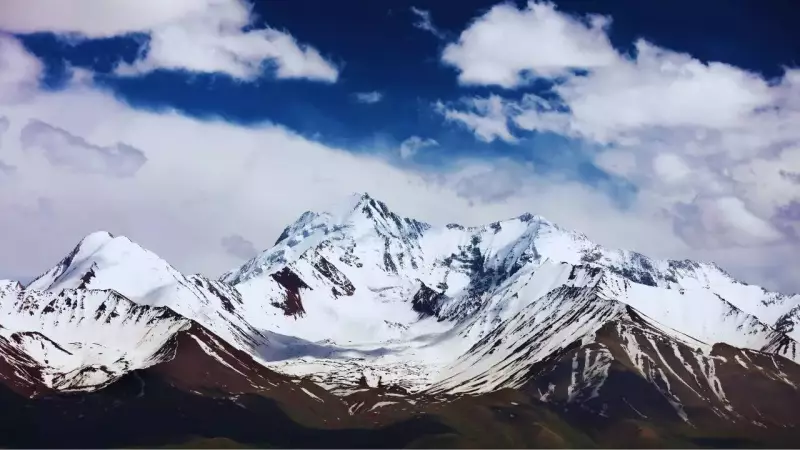
The natural beauty of the Pamirs is stark, dramatic, and distinct from the lush valleys of the Himalayas or Europe's forested slopes. Visitors encounter windswept plateaus, glacier-carved valleys, vibrant blue lakes, and snow-capped mountains that rise abruptly from arid plains. This area is dominated by glacial features, most notably the Fedchenko Glacier, the longest glacier outside the Polar Regions, which serves as a crucial water source for Central Asia. High-altitude lakes like the scenic Karakul Lake, situated over 4,000 meters, add splashes of color to the otherwise austere landscape.
Despite harsh conditions, nature thrives in this extreme habitat. The Pamir range is home to endangered species such as:
- The Marco Polo sheep, known for its impressive spiraled horns.
- The elusive snow leopard.
- Ibex and various birds adapted to cold, high-altitude environments.
For nature enthusiasts, it offers one of Earth's last untouched mountain habitats.
The Unique Culture of the Pamirs: A Silk Road Legacy
Historically, the Pamirs were integral to the ancient Silk Road, linking China to Central Asia, Persia, and India. Merchants, monks, and adventurers traversed these routes, leaving a rich cultural imprint. Today, the region is inhabited by the Pamir peoples, a collection of ethnic communities with distinct languages and traditions, separate from Tajik and Kyrgyz cultures. Travelers staying in family-run homestays often share meals of flatbread, yogurt, rice dishes, and local teas, gaining intimate insights into a culture shaped by endurance and generosity.

Tourism in the Pamirs: Adventure at the Top of the World
Tourism here remains relatively low-key compared to destinations like Nepal or Switzerland, adding to its allure. The region attracts adventure travelers, trekkers, mountaineers, and cultural explorers seeking raw landscapes and authentic experiences. One iconic route is the Pamir Highway, often hailed as one of the world's highest and most spectacular roads. Stretching from Dushanbe in Tajikistan to Osh in Kyrgyzstan, it climbs above 4,600 meters, passing through dramatic gorges, desert plateaus, and remote villages.
From gentle hikes along high-altitude lakes to challenging expeditions up major peaks like Peak Lenin and Muztagh Ata—among the more accessible 7,000-meter summits—the Pamirs never disappoint. Cultural tourism is equally rewarding, with ancient fortresses, petroglyph sites, and caravanserai ruins dotting the valleys, while local festivals and markets reveal the rhythms of Pamiri life.
What Tourists Can Expect: Preparation and Rewards
Visiting the 'Roof of the World' is no typical holiday; it requires preparation and patience. Key considerations include:
- Altitude and Climate: Much of the region exceeds 3,500 meters, making altitude sickness a real risk. Acclimatization through gradual ascent is essential. Summers are short and cool, with long, harsh winters.
- Basic Infrastructure: Accommodation primarily consists of homestays and guesthouses. In remote areas, electricity, internet, and medical facilities are scarce.
- Extraordinary Scenery: Visitors can anticipate vast vistas, clear starlit nights, and unparalleled isolation.
- Warm Hospitality: Despite the remoteness, tourists consistently praise the warmth and generosity of local communities.
In summary, the Pamir Mountains stand as a testament to nature's grandeur and human resilience, offering an unforgettable journey to the very roof of our world.