Growing Resentment in Panaji's Latin Quarter Over Unregulated Tourism
Resentment is intensifying among residents of Fontainhas and Sao Tome in Panaji, where locals report that unregulated tourism is rapidly degrading the distinctive character of their neighborhood and severely impacting their quality of daily life. Panaji's Latin Quarter, celebrated as a living museum of Portuguese heritage with its colonial houses painted in vibrant hues of yellow, blue, and red, is facing significant pressure from increasing visitor numbers.
Daily Disruptions and Civic Concerns
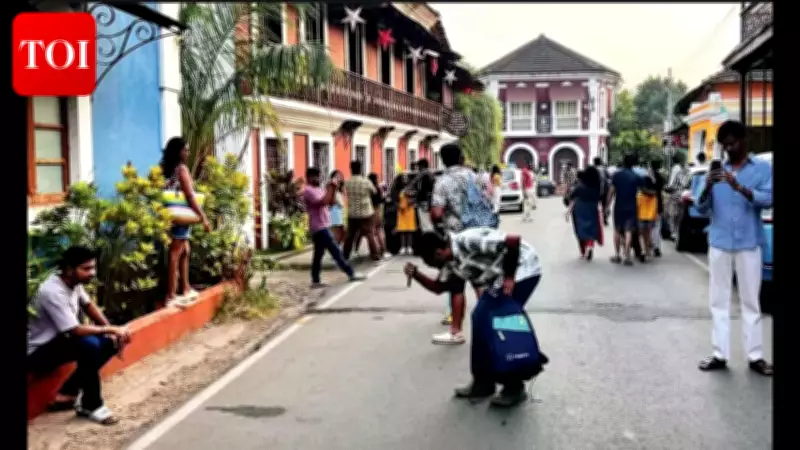
Residents of these two historic wards endure persistent issues including taxis blocking narrow heritage lanes, tourists trespassing into private homes to take photographs, and drunken disturbances late into the night. With corporation elections approaching, what was once considered a mere nuisance has escalated into a serious civic concern that demands immediate attention from local authorities.
"At any given hour, there are 100-150 tourists in the area," explained a senior citizen resident. "This number swells to nearly 1,000 people during peak tourist season. Visitors often behave as if the entire neighborhood serves as their personal backdrop, feeling entitled to conduct photoshoots wherever they please. But families live here. These are our homes, not photo props."

Inadequate Management and Calls for Regulation
Although the Corporation of the City of Panaji (CCP) has deployed wardens in some of the busiest lanes, residents allege that effective crowd management remains largely absent. "One cannot stop tourism entirely," acknowledged Aires Pinto Furtado, a local lawyer. "What we urgently need is proper regulation, not just token presence. Tourists should park their vehicles across the creek and walk to the Latin Quarter to prevent congesting our residential area."
Historical Context and Urban Planning Challenges
According to PhD scholar Maria de Lourdes Bravo da Costa, who has written extensively about Goan life in the early to mid-20th century, Panaji once possessed several architecturally significant urban spaces that have since been altered or replaced by modern structures. "We should build on our heritage and promote cultural tourism responsibly," she emphasized. "For a neighborhood once celebrated for its quiet charm, the fundamental question remains—can the city's new leadership protect its historic soul before it becomes overwhelmed by the very tourism it promotes?"
Architect, urban planner, and member of the council of architecture (Goa), Manguesh Prabhugaonker, highlighted that increasingly complex land-use patterns and a rapidly-growing floating population present major challenges for urban planning. He pointed out that Panaji's historic layout, including its traditional waterfronts and grid-iron planning pattern, was never designed to accommodate the current volume of visitors and commercial activity.
Proposed Solutions and Election Promises
According to Prabhugaonker, Panaji urgently requires a comprehensive review of its development strategy. He recommends several critical measures:
- Improved public transport systems
- Effective parking management solutions
- Substantial infrastructure upgrades
- Policies that balance resident needs with tourism demands
As civic elections approach, local residents are closely monitoring whether candidates will commit to stronger crowd control measures, stricter enforcement of regulations, and a clear, actionable plan to protect heritage residential areas from further degradation.