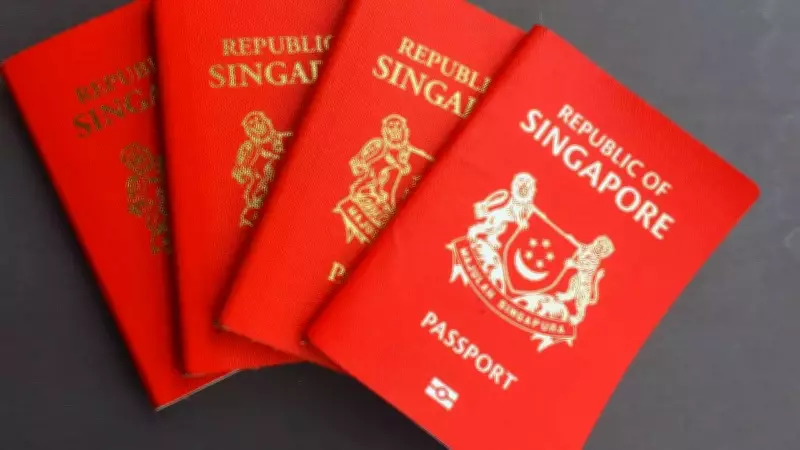
For years, the Singapore passport has been celebrated as the gold standard of global mobility, consistently topping the Henley Passport Index and offering its holders extraordinary freedom to move across borders with minimal friction. From Europe's Schengen zone to much of Asia, Africa, and the Americas, Singaporeans can travel with little more than a flight ticket and a stamped passport. For Singaporeans, the world remains remarkably open, though not entirely without borders.
The Reality of Global Travel for Singapore Passport Holders
Even the world's most powerful passport does not unlock every door automatically. According to the Henley Passport Index, there remains a small number of countries where Singaporean passport holders must still apply for visas in advance, alongside others that require electronic visas, electronic travel authorisations, or visas on arrival. These exceptions reveal how geopolitics, security policies, and diplomatic reciprocity continue to shape global travel.
Henley Global Passport Ranking: The Numbers at a Glance
Based on Henley's 2026 data, the breakdown of entry requirements for Singapore passport holders is as follows:

Traditional Visa Requirements
Seventeen countries require a traditional visa before travel:
- Afghanistan
- Algeria
- Central African Republic
- Chad
- Congo (Republic)
- Eritrea
- Falkland Islands
- Iraq
- Libya
- Mali
- Nauru
- Niger
- North Korea
- Sudan
- Turkmenistan
- Venezuela
- Yemen
E-Visa Requirements
Seventeen countries require an e-visa:
- Bhutan
- Bolivia
- Cameroon
- Congo (Democratic Republic)
- Equatorial Guinea
- India
- Liberia
- Mauritania
- Nigeria
- Pakistan
- Russian Federation
- Sao Tome and Principe
- Somalia
- South Sudan
- Syria
- Togo
- Ukraine
Electronic Travel Authorisation (ETA) Requirements
Thirteen countries require an Electronic Travel Authorisation:
- American Samoa
- Australia
- Canada
- Israel
- Mozambique
- New Zealand
- Palestinian Territory
- Puerto Rico
- Seychelles
- St. Kitts and Nevis
- United Kingdom
- United States
- US Virgin Islands
Visa on Arrival Options
Twenty-seven countries offer a visa on arrival:
- Azerbaijan
- Bahrain
- Bangladesh
- Benin
- Burundi
- Comoro Islands
- Egypt
- Ethiopia
- Guinea Bissau
- Jordan
- Kuwait
- Lebanon
- Madagascar
- Maldives
- Marshall Islands
- Nepal
- Niue
- Palau Islands
- Papua New Guinea
- Qatar
- Samoa
- Saudi Arabia
- Sierra Leone
- Solomon Islands
- Tonga
- Tuvalu
- United Arab Emirates
In other words, while Singaporeans enjoy visa-free or simplified access to the vast majority of the world, a handful of destinations still involve paperwork and planning.
Why Do These Exceptions Exist?
It's tempting to assume that a powerful passport should guarantee entry everywhere, but international travel is governed by more than rankings. One major factor is diplomatic reciprocity. Visa policies are often shaped by how countries treat each other's citizens. If visa-free agreements are not mutually negotiated, traditional visa requirements remain in place.
Security considerations also play a significant role. Countries experiencing internal conflict, political instability, or cross-border security challenges often enforce stricter entry rules for all travelers, regardless of nationality.
In some cases, limited diplomatic infrastructure is the issue. Smaller or more isolated nations may lack the systems needed to support visa-free entry or electronic authorisations, relying instead on manual processing through embassies.
Not Visa-Free, But Still Traveler-Friendly
Importantly, not all restrictions are equal. Many destinations that are not visa-free still offer e-visas, ETAs, or visas on arrival, which are far less cumbersome than traditional embassy visas.

An e-visa typically involves an online application, document upload, and approval before travel, often completed within days. ETAs are even simpler, functioning as pre-travel clearances rather than full visas. Visas on arrival, meanwhile, allow travelers to obtain permission to enter upon landing, usually with minimal paperwork.
Why Travelers Should Still Check the Fine Print
Despite impressive rankings, visa rules are not static. Entry policies can change due to health emergencies, diplomatic shifts, or security developments, sometimes with little notice. A destination that allows visa-free entry one year may introduce new requirements the next.
For this reason, even Singapore passport holders are advised to:
- Check official embassy or immigration websites before booking
- Verify airline entry requirements, which are often stricter than immigration summaries
- Allow extra time when traveling to destinations requiring visas or authorisations
Assuming visa-free access without verification can still lead to denied boarding or entry complications.