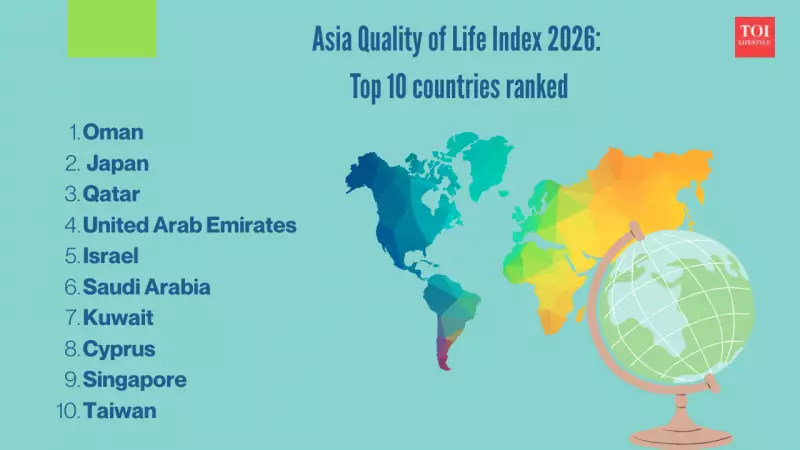
Asia's Top 10 Countries for Quality of Life in 2026 Revealed
People today care more about how they live than just how much they earn. The Quality of Life Index measures this by looking at safety, income, healthcare, pollution, and daily commutes. Numbeo, a data platform, uses user surveys and an empirical formula to calculate these scores for 2026. Higher scores mean better living conditions. Let's explore the top ten Asian countries that excel in providing a high quality of life.
1. Oman Takes the Lead
Oman tops the list with an impressive score of 207.6. It shines in purchasing power and housing affordability, boasting one of the lowest property price-to-income ratios among top-ranked nations. Low pollution levels and short commute times also boost its ranking. While healthcare scores are not the highest, overall factors like safety and daily comfort secure Oman's first place.
2. Japan Follows Closely
Japan ranks second with a score of 185.6. The country excels in healthcare standards, safety, and climate. Although property prices and commutes are higher than in Gulf countries, efficient public services and solid urban planning ensure a stable quality of life for residents.

3. Qatar Holds Strong
Qatar secures third place with a score of 182.7. Strong purchasing power and safety indicators drive its position. Housing remains affordable, and commutes are manageable. However, higher pollution and a lower climate index slightly reduce its overall score.
4. United Arab Emirates Ranks High
The United Arab Emirates comes next with a score of 175.5. Safety and high purchasing power are standard here, supported by state-of-the-art infrastructure. Good healthcare is available, but high living costs and real estate prices make life expensive, especially in major cities.
5. Israel Faces Challenges
Israel ranks fifth with a score of 167.7. It offers excellent healthcare and one of Asia's best climate indices. Yet, high living costs and property price-to-income ratios pose constant challenges, affecting long-term affordability for residents.
6. Saudi Arabia Shows Promise
Saudi Arabia holds the sixth position with a score of 165.3. Strong purchasing power, low cost of living, and reasonable commute times contribute to its ranking. Pollution and climate issues drag the score down slightly, while healthcare scores remain average.
7. Kuwait Balances Strengths and Weaknesses
Kuwait takes seventh place with an index of 162.7. It boasts the highest purchasing power among the top ten Asian countries. However, poorer health scores, heavy pollution, and average safety measures keep its overall ranking moderate.
8. Cyprus Enjoys Favorable Conditions
Cyprus ranks eighth with a score of 159.6. A favorable climate, reasonable commuting times, and low cost of living support its standing. Reduced purchasing power and health scores prevent it from climbing higher.
9. Singapore Struggles with Costs
Singapore places ninth with a score of 158.1. The city-state offers a safe environment, high-quality healthcare, and low pollution. Sky-high living costs and property prices, along with long commutes, overshadow these strengths.
10. Taiwan Completes the List
Taiwan rounds out the top ten with a Quality of Life Index of 155.5. It excels in healthcare, safety, and climate indicators. Housing affordability concerns, reflected in high property price-to-income ratios, limit its ability to rank further up.
This ranking highlights how diverse factors shape quality of life across Asia. From Oman's affordability to Japan's healthcare, each country offers unique advantages. Consider these insights if you're planning a move or simply curious about living standards in the region.