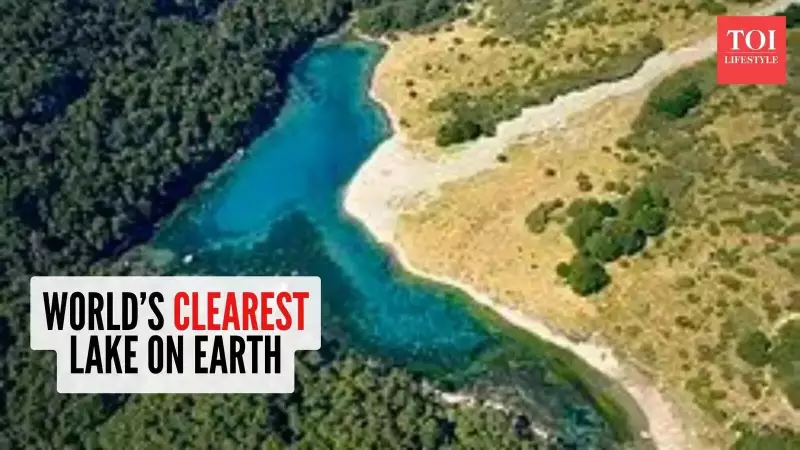
New Zealand's Blue Lake: Where Visitors Must Wipe Their Shoes
Picture a lake so transparent that even a single speck of dust seems like an intrusion. This remarkable body of water actually exists in New Zealand's mountains. Visitors receive a polite but firm request before approaching its shores. They must carefully wipe their shoes clean.
The Location of the World's Clearest Lake
Rotomairewhenua, commonly called Blue Lake, sits within Nelson Lakes National Park on New Zealand's South Island. Alpine forests and rugged mountain peaks surround this remote destination. No roads lead directly to the lake. Reaching it demands significant effort, considerable patience, and deep respect for the natural environment.
Why Shoe Wiping is Mandatory
The lake holds profound sacred meaning for the local Māori tribe, Ngāti Apa ki te Rā Tō. Their traditions regard the water as a place for spiritual cleansing. Dirt, bacteria, or mud carried on footwear could easily disturb its exceptional purity. Cleaning shoes before approaching the shoreline actively protects both its cultural value and its delicate ecosystem.

The Science Behind Its Unmatched Clarity
Scientific measurements confirm underwater visibility between 70 and 80 meters. This clarity surpasses all other natural lakes studied worldwide. The water flows into Blue Lake through underground rock systems. These rocks function as highly effective natural filters. They remove nearly all particles long before the water ever reaches the lake's surface.
The Journey to Reach Blue Lake
Most travelers begin their trip from the small town of St Arnaud. The journey involves a multi-day hike along the challenging Travers-Sabine Track. This lengthy walk naturally limits visitor numbers. It helps preserve the lake's untouched condition. Swimming is strongly discouraged. Most people simply admire the stunning view quietly from the shore.
Essential Information for Visitors
Blue Lake presents a unique visual characteristic. No visible fish or plants inhabit its surface waters. This absence contributes directly to its glass-like appearance. Weather conditions in this alpine region can change with startling speed. Travelers must follow all local guidelines closely. Showing respect is not merely a suggestion here. It forms an integral part of the entire experience.
Important Note:This information serves general awareness purposes only. Travel access, cultural protocols, and conservation rules may evolve. Visitors should always adhere to official instructions and honor Māori customs completely.