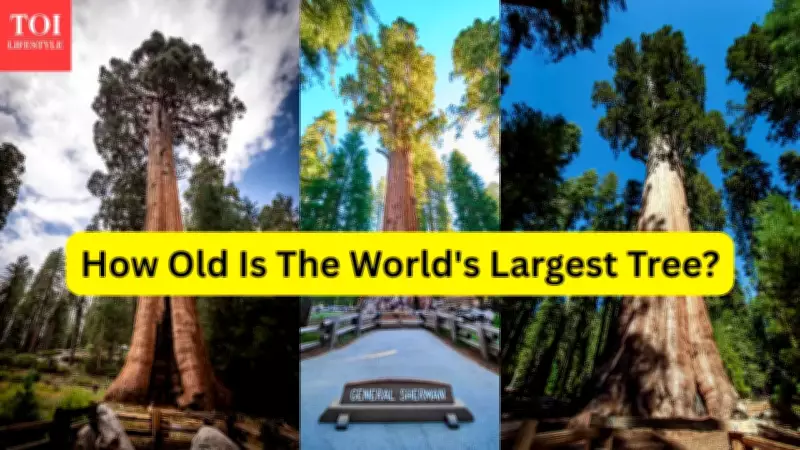
How Old Is the World's Largest Tree? 5 Facts That Inspire Travelers to See It
People often assume they know what they are going to see when they visit General Sherman. After all, it is one of the most photographed trees in the world. There are thousands of videos online, endless travel reels, drone shots, documentaries, postcards, and guidebooks. By the time most travellers arrive at Sequoia National Park, they think they are prepared. They usually are not. The problem is scale. Cameras are terrible at explaining scale when the subject is this large. As you stroll through the woods, you will notice giant sequoias all around you, which is already strange in itself because even the smaller trees are exceptionally tall. In fact, most of them could form entire forests in other parts of the world. Then you get to the General Sherman tree, and you will feel like nothing makes sense visually anymore. Here are five facts about the giants that make tourists visit California's sequoia forest.
It Was Already Ancient When Many Civilizations Were Still Emerging
Scientists estimate the General Sherman tree to be between 2,200 and 2,700 years old. That means the tree began growing long before the rise of many modern nations and was already centuries old during the classical era. Unlike ancient ruins, however, this is not a preserved remnant of the past. The tree is still alive, still growing, and still producing new wood every year. For many travellers, that is what makes the experience so unusual — standing in front of something living that has survived for more than two millennia.
It Is Not the Tallest Tree on Earth — But It Is the Largest
And here lies the confusion. While the General Sherman is one of the tallest trees in the world, it isn't the tallest. The tallest trees are the coastal redwood trees that grow in California. The General Sherman takes this place because of its huge volume. It has a tremendous height, a humongous trunk girth, and massive branches. Its wood volume is greater than any other tree discovered. It's hard to imagine the measurements. The tree stands about 274 feet tall. Its base girth measures more than 100 feet, while its trunk volume is estimated at over 52,000 cubic feet. Some of its large branches are larger than complete mature trees in many forests across the globe.

Fire Is Essential for Its Existence
One of the things visitors are surprised to learn about giant sequoias in Sequoia National Park is that the trees evolved with the presence of wildfires rather than merely surviving amidst them. The bark of the giant sequoias can reach a thickness of over two feet, and it also has tannins that help prevent most small fires from burning the bark of the tree. Small fires remove the competition from other vegetation and provide ideal conditions for the sequoias.
The Tree Is So Large That Photographs Barely Explain It
Most likely, this is one of the most frequently noted remarks made by people who have seen the photos of General Sherman – it just doesn't look as huge as it actually is. People only understand the size when they are standing next to the tree. People who get closer to the tree at its very bottom look tiny. In addition, its trunk looks like a reddish rock wall rather than a huge tree. Photographs tend to shrink trees and that's why tourists note how totally different the feeling they experience from what they see in photos for years is. And walking towards the giant tree makes them realize even better how big it really is. The other trees around also seem huge but there is something special about General Sherman even among sequoias.
Going to the Tree Is an Experience Too
Unlike many famous landmarks surrounded by cities, the General Sherman tree sits within the high-elevation wilderness of the Sierra Nevada mountains. The drive into Sequoia National Park gradually transitions from dry Californian terrain into colder mountain forests filled with towering conifers, winding roads, granite landscapes, and occasional wildlife sightings. Weather conditions can change quickly, and snow is possible during colder months even when lower parts of California remain warm.