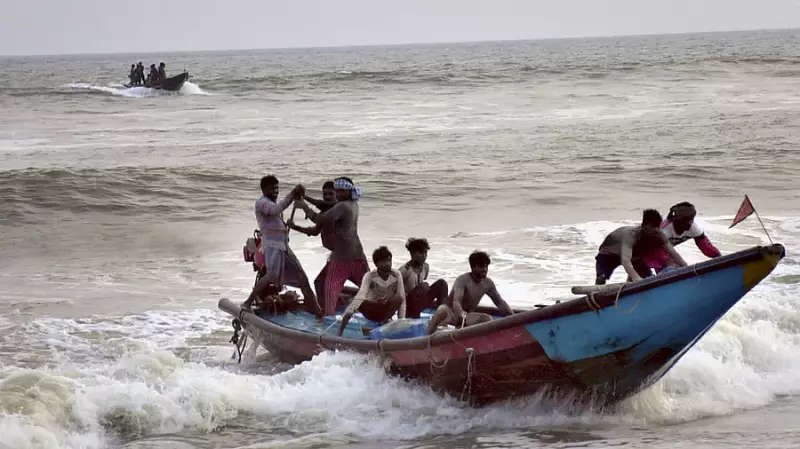
The Sri Lankan Navy has apprehended eleven Indian fishermen and confiscated their fishing trawler, reigniting concerns over long-standing maritime disputes in the Palk Strait. The incident, which occurred on Tuesday, involves fishermen hailing from Tamil Nadu, marking another flashpoint in the sensitive waters dividing India and Sri Lanka.
Details of the Maritime Incident
According to official reports, the arrest took place on the night of April 29. The Sri Lankan naval personnel intercepted an Indian fishing trawler that was allegedly operating within Sri Lanka's territorial waters. The vessel and the eleven crew members on board were subsequently taken into custody. The fishermen are believed to be from Ramanathapuram district in Tamil Nadu, a region frequently affected by such incidents.
The trawler and the detained fishermen were transported to the Kankesanthurai port in Sri Lanka's Northern Province for legal proceedings. This action underscores the continued enforcement of maritime boundaries by the Sri Lankan authorities, who often cite illegal poaching in their waters as a primary reason for such arrests.

Ongoing Tensions and Diplomatic Context
This event is not an isolated one. The arrest of Indian fishermen by the Sri Lankan Navy is a recurrent issue, creating diplomatic friction between the two neighboring nations. The core of the dispute lies in the contested maritime boundary in the Palk Strait, a narrow channel that separates Tamil Nadu from Sri Lanka's northern coast.
Fishermen from Tamil Nadu often venture into these waters, which are rich in marine resources, leading to accusations from Colombo of trespassing and illegal fishing. The Sri Lankan side maintains that such activities deplete the livelihood of its own fishing communities and damage the marine ecosystem.
In response to such incidents, Indian authorities typically engage in diplomatic channels to secure the release of the fishermen. The Indian government is expected to take up the matter with Sri Lankan officials through established protocols. The fishermen are likely to be charged under Sri Lanka's Fisheries and Aquatic Resources Act.
Implications and the Path Forward
The latest arrest highlights the persistent and complex nature of the fishermen's issue, which remains unresolved despite high-level talks between the two countries. It directly impacts the livelihoods of hundreds of families in coastal Tamil Nadu and strains bilateral relations.
Key challenges include:
- Defining a clear and mutually acceptable maritime boundary.
- Regulating fishing practices to ensure sustainability.
- Establishing a swift and humane mechanism for the release of arrested fishermen and their vessels.
While diplomatic efforts continue, a lasting solution requires cooperation on fisheries management and possibly joint patrolling. For now, the families of the eleven detained fishermen await news of their release, hoping for a swift resolution to this recurring crisis.