The strategic defence partnership between the United Kingdom and India has scaled unprecedented heights in 2025, marking it as a landmark year for bilateral security cooperation. This transformative phase is characterized by groundbreaking technology transfers, high-level diplomatic engagements, and enhanced military interoperability, solidifying a shared commitment to a free and open Indo-Pacific region.
A Year of Strategic Milestones and High-Level Exchanges
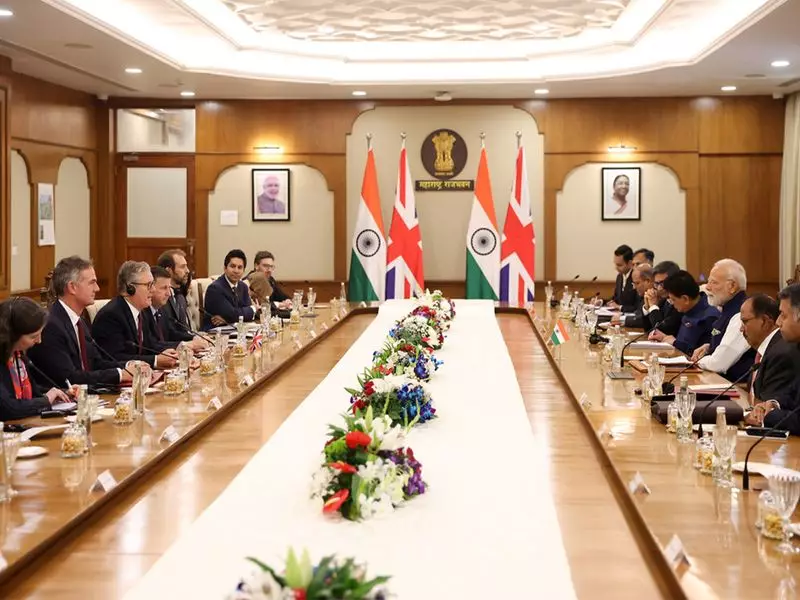
The year's momentum was significantly bolstered by the visit of UK Prime Minister Keir Starmer to India in September 2025. During this pivotal visit, Prime Minister Starmer and Indian Prime Minister Narendra Modi held extensive talks, with defence and security cooperation forming a core pillar of their discussions. This high-level engagement set the stage for accelerated collaboration.
Following this, UK Defence Secretary John Healey undertook a crucial visit to India in November 2025. His meetings with Indian Defence Minister Rajnath Singh were instrumental in taking the partnership forward. The dialogues focused on operationalising key agreements and exploring new avenues for joint development and manufacturing, reflecting a mutual desire to move beyond a traditional buyer-seller relationship to one of co-creation and technology sharing.

The Cornerstone: Fighter Jet Engine Technology Transfer
At the heart of this landmark year is the monumental progress on the fighter jet engine technology transfer deal. The UK has confirmed its commitment to sharing cutting-edge jet engine technology with India, a move of immense strategic significance.
This collaboration involves UK-based Rolls-Royce working alongside India's Defence Research and Development Organisation (DRDO) to co-produce engines for India's future indigenous combat aircraft. The deal, which aligns with India's 'Make in India' and 'Atmanirbhar Bharat' (Self-Reliant India) initiatives, promises to:
- Enhance India's indigenous defence manufacturing capabilities.
- Provide advanced, reliable propulsion for India's next-generation fighter jets.
- Foster deep, long-term industrial and technological ties between the two nations.
This initiative represents one of the most substantial technology sharing efforts by the UK with any country in recent decades and is a clear testament to the trust and strategic convergence between London and New Delhi.
Deepening Military Interoperability and Exercises
Beyond technology, 2025 has seen a significant ramp-up in operational military cooperation. The armed forces of both nations have engaged in increasingly complex and sophisticated joint exercises across all domains:
The Konkan Shakti naval exercise has grown in scale and complexity, featuring aircraft carriers, destroyers, frigates, and submarines. These drills enhance interoperability in critical areas like anti-submarine warfare, air defence, and maritime security operations in the Indian Ocean Region.
Air forces have conducted advanced aerial combat training exercises, while army units have engaged in joint counter-terrorism and jungle warfare drills. These activities build mutual understanding, refine tactical procedures, and prepare both forces for potential collaborative operations in the future.
The underlying driver for this intensified partnership is a shared concern over stability in the Indo-Pacific and a common vision for a rules-based international order. Both democracies view a stronger defence bond as essential for addressing regional challenges and ensuring security of sea lanes and global trade routes.
As 2025 draws to a close, the UK-India defence relationship stands fundamentally transformed. It has evolved into a comprehensive, technology-centric partnership with a clear strategic vision. The successful implementation of the engine deal and the continued expansion of joint exercises will likely define the trajectory of this crucial bilateral tie for years to come, making 2025 a true landmark year in the annals of their defence cooperation.