

Air India 171 Crash: Unraveling the Four-Second Discrepancy in the Investigation
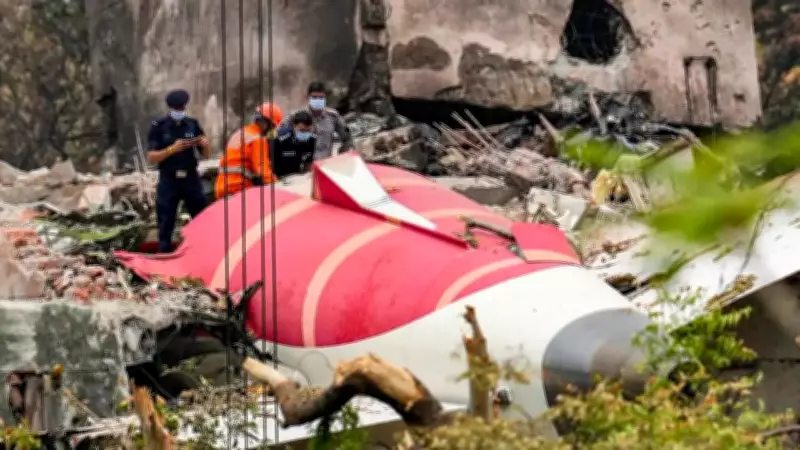
On June 12, a Boeing 787-8 Dreamliner took off from Ahmedabad airport, bound for London Gatwick with 242 people on board. Thirty-two seconds later, the aircraft plummeted, striking a medical college complex 1.6 km from the runway. The tragic crash claimed 241 lives, leaving one survivor. In the aftermath, a narrative emerged in media and aviation forums suggesting deliberate pilot action, with fuel control switches moved to CUTOFF, starving the engines. However, the official investigation has not confirmed this, and a pilots' organization has raised a technical question that could upend the suicide theory.
The Core Question: RAT Deployment Timing
The Federation of Indian Pilots (FIP) has formally asked: Did the Ram Air Turbine (RAT) deploy before the fuel control switches moved? The RAT is Boeing 787's emergency power system, a last-resort device that deploys automatically after a complete electrical failure. If the RAT deployed first, it would indicate the aircraft had already lost power independently, making fuel switch movements a consequence, not a cause, of the disaster.
Evidence from the Preliminary Report
The Aircraft Accident Investigation Bureau (AAIB) preliminary report includes a crucial CCTV frame showing the RAT deployed just after lift-off, a sign of catastrophic failure. The timeline from the Enhanced Airborne Flight Recorder (EAFR) records fuel cutoff switches moving at approximately 1:38:42 pm, with RAT hydraulic power supply beginning at 1:38:47 pm—a four-second gap. This sequence implies fuel cutoff preceded RAT deployment.

Technical Discrepancy Highlighted by FIP
The FIP points to manufacturer documentation stating the RAT requires 10 to 15 seconds to deploy after electrical loss, not four seconds. This discrepancy suggests the RAT may have been triggered by an earlier electrical failure, before the fuel switches moved. The FIP's letters to AAIB emphasize this, calling for a reevaluation of the timeline.
CCTV and Simulator Reconstruction
Additional CCTV frames show a dark object on the aircraft's underbelly, consistent with RAT door movement, while the plane was still on the runway. The FIP requests a flight simulator reconstruction to correlate visual evidence with black box data, testing scenarios of electrical failure versus deliberate crew action.
What the Preliminary Report Leaves Unanswered
The AAIB report notes details like cockpit voice recordings and fuel switch transitions but avoids analysis. It mentions a 2018 FAA bulletin on fuel switch locking features, hinting at potential technical issues without pursuing them. The report's structure has fueled media speculation, but final conclusions await the June 12, 2026 deadline.
Three Possible Interpretations
- Manual RAT Deployment: The timeline is accurate, with crew manually deploying RAT simultaneously with fuel cutoff.
- Data Synchronization Issue: EAFR data may have recording errors, misrepresenting the 4-second interval.
- Electrical Failure First: An earlier power loss triggered RAT deployment, with fuel switches moving later due to mechanical or crew response.
Stakes and Next Steps
If the investigation wrongly attributes the crash to pilot action, it could tarnish the crew's legacy and overlook systemic failures. The FIP has posed specific technical questions to AAIB, demanding clarity on RAT deployment commands and parameter definitions. A transparent, rigorous answer is essential before the final report, which will be pivotal for aviation safety in India.






