

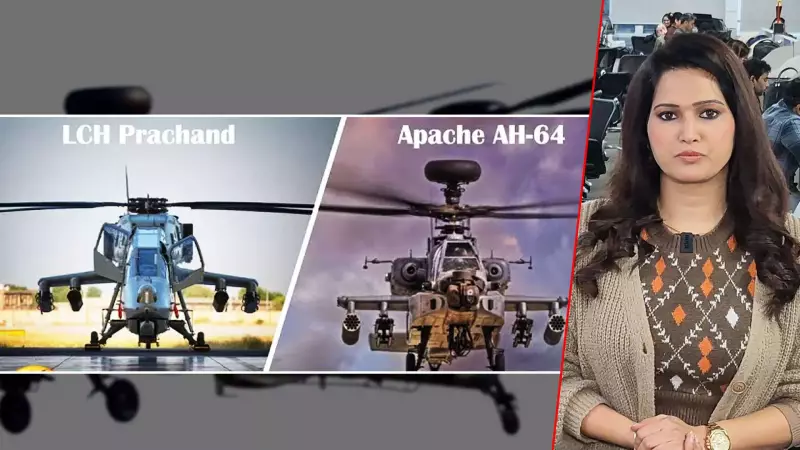
A decisive shift in India's military aviation strategy has been cemented with the recent induction of the final batch of Apache AH-64e attack helicopters. This move underscores a clear strategic doctrine: India is no longer relying on a single platform to address its diverse and complex security challenges. Instead, by strategically pairing the formidable American-made Apache with the homegrown Light Combat Helicopter (LCH) Prachand, the Indian Army has forged a versatile, two-pronged aerial strike capability that stands unrivaled in the region.
A Strategic Pairing for Diverse Battlefields
The brilliance of this dual-helicopter strategy lies in leveraging the unique strengths of each platform for specific terrains. The Apache AH-64e, renowned as one of the world's most advanced attack helicopters, is optimized for high-intensity, combined arms warfare. Its primary role is to dominate open battlefields, such as the desert sectors along India's western front, where its powerful sensors, long-range Hellfire missiles, and 30mm chain gun can decimate enemy armour formations.
In stark contrast, the indigenous Prachand is an engineering marvel built for a completely different environment. It is specifically engineered for high-altitude combat in mountainous regions like the Himalayas. Here, factors like weight, engine performance at thin air, and extreme agility are not just advantages but critical for survival and mission success. The Prachand can operate effectively at altitudes where few other attack helicopters can, providing crucial fire support in the world's most treacherous terrain.

Beyond the Foreign vs Indigenous Debate
This procurement strategy moves the conversation beyond simplistic debates of foreign versus indigenous equipment. The focus is squarely on operational pragmatism: deploying the right weapon system for the right terrain and mission profile. It is a testament to India's maturing defence planning, which seeks to build layered capabilities.
The integration of these two potent platforms ensures that the Indian Army Aviation Corps can conduct effective combat operations across the entire spectrum of altitudes, climates, and battlefield conditions along India's vast and varied borders. From the scorching sands of Rajasthan to the icy heights of Siachen and the dense forests of the northeast, this combination provides commanders with a flexible and powerful aerial fist.
Forging a Comprehensive Aerial Strike Edge
The operational implications are profound. This dual capability allows for seamless force application across potential fronts. While the Apache guards the plains and desert sectors with its overwhelming firepower, the Prachand secures the precarious Himalayan heights, able to hunt high-value targets, support ground troops in unforgiving ridges, and counter enemy threats in zones previously considered less accessible to heavy attack helicopters.
Together, they form a complementary shield and sword. The completion of the Apache squadron inductions, coupled with the ongoing deployment of the Prachand squadrons, marks a significant milestone in India's journey towards strategic self-reliance and tactical superiority. It sends a clear message of deterrence, showcasing a military prepared to fight and win in any environment it is tasked to defend.






