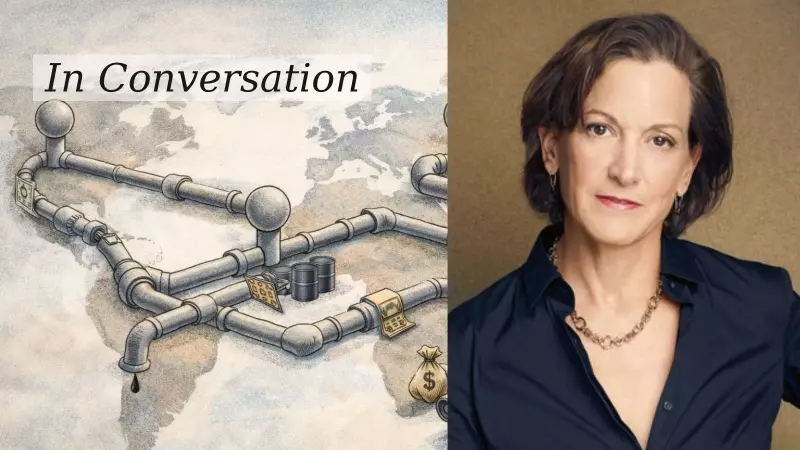
Anne Applebaum: Trump's Venezuela Intervention Follows Dictator Pattern, Not Historic Monroe Doctrine
Pulitzer Prize-winning historian and journalist Anne Applebaum warns that today's global order is shifting dangerously. She sees authoritarian language, unilateral power, and corruption reshaping international relations. This push is moving the world toward a more volatile, zero-sum era.
Trump's Venezuela Action Mirrors Authoritarian Tactics
Applebaum spoke with The Indian Express shortly after the United States, under Donald Trump, attacked Venezuela. She draws insights from her book Autocracy, Inc. and examines how modern authoritarian power operates through transnational networks.
"What you see now is Donald Trump following a pattern established by other dictatorships," Applebaum states. She points to Vladimir Putin's 2022 invasion of Ukraine, justified by claims that Ukraine is Russian territory. "You now have similar language coming from the President of the United States—that he can do what he wants in Venezuela because it's in the Western Hemisphere."

Applebaum clarifies that not everyone in the Trump administration uses this rhetoric. There were legal and moral arguments for removing Nicolás Maduro, who led a damaging Chavista regime. "It would have been possible to create a regional alliance for change in Venezuela, but that's not how Trump chose to do it," she notes. "I think that will have negative repercussions."
The Monroe Doctrine: Misunderstood and Misused
With recent U.S. actions, some argue the Monroe Doctrine has returned. Applebaum sets the record straight. "To be clear, there is no Monroe Treaty. There is something called the Monroe Doctrine, which dates from the first part of the nineteenth century," she explains.
The Monroe Doctrine was a statement against European imperial powers in the Western Hemisphere. "It was a statement that the US would work against French, Spanish, and British incursions into the region. It was not a statement of American imperial dominance, and it never was," Applebaum emphasizes.
Trump's use of the phrase diverges from its original intent. U.S. policy toward Latin America over recent decades focused on trade relations and sovereignty recognition. "Whether that continues remains to be seen," Applebaum says. "One thing I think will happen is that once the US openly defines itself as a regional bully and nothing else, many Latin American countries will begin to organise against the United States."
She acknowledges Venezuela was a disaster under Maduro but criticizes Trump's language. "What disturbs me is the language being used and the way Trump talks about running Venezuela as if he were running it, which obviously he is not."
Global Power Shifts and Authoritarian Normalization
Applebaum assesses broader implications. If the U.S. claims the Western Hemisphere as its exclusive area, other powers might follow. "The Chinese might say they are in charge of Asia, which would not be very popular in India, Japan, South Korea, the Philippines, or anywhere else," she observes. "I don't think anybody wants to be a Chinese colony. It sets a bad precedent."
She identifies two key factors driving the normalization of authoritarian practices globally:

- Technology and Social Media: "Social media has become our main form of communication, and it promotes the most divisive and angry opinions while suppressing better conversation and more rational views. It boosts conspiracy theories rather than analysis." This connects disparate countries like Poland, the United States, India, and the Philippines.
- Economic Inequality: "Another part of the story is the enormous inequality that has opened up. A small number of people have become billionaires thanks to the tech revolution, while many others feel left behind. That creates dissatisfaction, anger, and a sense of injustice."
Transactionalism or Corruption?
Many observers note international relations are becoming more transactional. Applebaum offers a sharper view. "What I think we're really seeing, though, isn't transactionalism so much as corruption," she argues.
Leaders in Russia, the United States, and China combine political and economic power for personal enrichment. "The traditional purpose of government was to improve life for people, to create a peaceful state and a prosperous polity. Now, for many politicians, the point of being in government is personal or familial enrichment," Applebaum states. Technology and cryptocurrency have made it easier to hide wealth, amplifying this trend.
Autocratic Networks and a Changing World
In Autocracy, Inc., Applebaum argues autocrats unite by interests, not ideology. This view remains strong. "There is a network of autocratic states that work together based on shared interests, not ideology," she confirms. Links between Russia, China, Iran, North Korea, and previously Venezuela persist, along with connections in Russian-dominated parts of Africa.
Applebaum reflects on the fate of the 'Davos man'—the global elite committed to cooperation. "The era when we believed global cooperation would solve most problems did have naïve elements. But we are going to be very sad when it is gone," she says. "What is replacing it is bitter competition for resources and attempts by larger countries to crush smaller ones. It will be an uglier world."
She sees nativism and hypernationalism replacing globalization, with global competition escalating. "In some ways we are already in a kind of world war," Applebaum suggests, citing Russia's invasion of Ukraine and hybrid warfare. "Instead of countries seeking mutually beneficial solutions, there is a growing belief in a zero-sum game—competition over minerals, oil, and power."
Applebaum's analysis paints a stark picture of a world where authoritarian practices spread, corruption undermines governance, and global cooperation frays. The consequences, she warns, could lead to increased violence and instability worldwide.