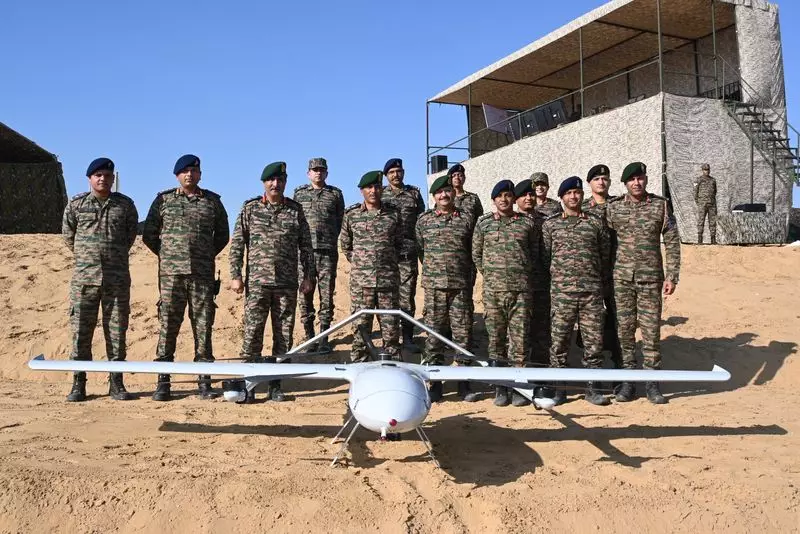
The Indian Army has taken a significant step forward in bolstering its aerial surveillance and reconnaissance capabilities along the western frontier. In a recent and crucial test, the Army's Western Command successfully evaluated a new, indigenously developed long-range drone system. This unmanned aerial vehicle (UAV) is specifically engineered to be resilient against sophisticated electronic warfare (EW) threats, a critical requirement in modern combat scenarios.
A Strategic Test for Modern Battlefield Challenges
The trial was conducted under the operational purview of the Jaipur-based Headquarters of the Western Command. This command is responsible for one of India's most sensitive and active fronts, making the test highly relevant and strategic. The primary objective was to assess the drone's performance in a simulated environment where an adversary could deploy electronic countermeasures to jam, spoof, or hijack the UAV's control and navigation systems.
The drone successfully demonstrated its ability to penetrate and operate in contested airspace where electronic warfare systems are active. This resilience is a game-changer, as traditional drones are often vulnerable to such disruptions, which can lead to loss of control, compromised missions, or even capture. The successful test indicates that the system can maintain communication links, execute its flight path, and deliver critical intelligence even under hostile electronic conditions.
Enhancing Border Surveillance and Security
The introduction of this robust, long-range drone platform is set to dramatically enhance the Indian Army's surveillance posture. With its extended operational range, the UAV can peer deep into hostile territory, providing real-time, high-quality imagery and data on troop movements, infrastructure development, and other activities of strategic interest. This capability allows for proactive decision-making and quicker response times to potential threats.
For the Western Command, which guards vast stretches of border, such persistent, long-duration surveillance is invaluable. It reduces the reliance on riskier manned missions and provides commanders with a persistent 'eye in the sky'. The drone's electronic warfare resilience ensures that this vital intelligence feed remains uninterrupted, even during periods of heightened tension or conflict when EW assets are most likely to be deployed by an opponent.
Focus on Indigenous Defence Technology
This test underscores the Indian Army's growing emphasis on integrating cutting-edge, homegrown technology into its operational fabric. By validating an indigenous system designed to counter specific threats faced on its borders, the army is reducing dependency on foreign imports and fostering innovation within the domestic defence industry.
The development and testing of such specialized equipment signal a mature understanding of contemporary warfare dynamics, where the electromagnetic spectrum is as much a battleground as the physical terrain. Investing in electronic warfare-resistant platforms is no longer a luxury but a necessity for maintaining tactical and strategic superiority.
While the exact technical specifications, manufacturer, and nomenclature of the drone system were not disclosed in the report, the successful trial marks a clear milestone. It points to a focused effort to equip frontline commands with tools that are not just advanced, but also survivable in the complex threat environment of the 21st century. The move is expected to pave the way for further induction and deployment of similar systems across other commands, significantly upgrading India's overall defence preparedness and intelligence, surveillance, and reconnaissance (ISR) architecture.