

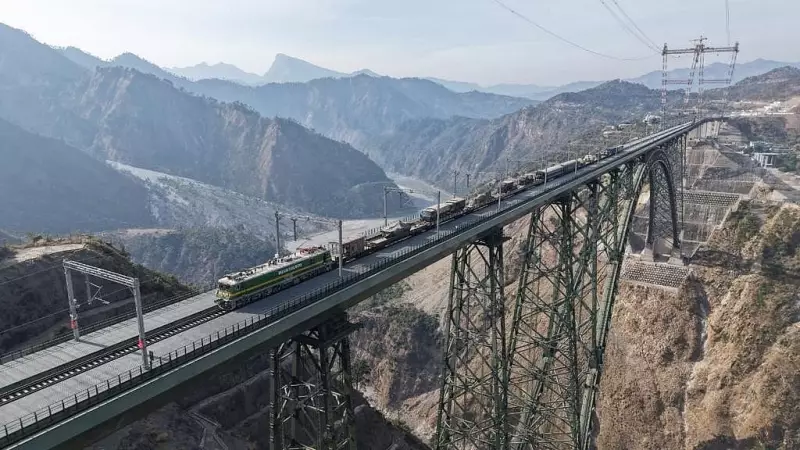
In a significant move to bolster its logistical capabilities and operational readiness in the region, the Indian Army has successfully conducted a pioneering test of moving battle tanks and heavy artillery using the railway network in Jammu and Kashmir. This innovative exercise marks a strategic shift towards faster and more efficient deployment of critical military assets.
Strategic Logistics Exercise in Challenging Terrain
The test was carried out on April 29 and 30, 2024, focusing on the Banihal-Srinagar-Baramulla rail section. This area presents unique geographical and security challenges, making the successful trial a notable achievement for the army's Northern Command. The primary objective was to validate the concept of using India's extensive rail infrastructure for the swift transportation of heavy combat equipment closer to potential operational areas.
During the exercise, the army moved T-72 tanks and 130mm artillery guns on modified railway flat cars. This method demonstrated a capability to transport an entire armoured unit or artillery regiment over long distances in a significantly shorter time compared to traditional road marches. The use of railways reduces wear and tear on both the equipment and the road infrastructure, while also allowing for movement under any weather conditions.

Enhancing Rapid Deployment and Deterrence
This logistical innovation is not just about transportation; it's a force multiplier. The ability to swiftly move heavy armour and firepower via rail provides the Indian Army with enhanced strategic flexibility. It allows for quicker reinforcement of deployed forces and a more rapid response to emerging threats along the Line of Control (LoC) and other sensitive areas in the Union Territory.
The successful test underscores the army's focus on integrating multi-modal transport solutions to overcome the limitations posed by the mountainous terrain of Kashmir. Road networks, while crucial, can be vulnerable to disruptions due to weather, landslides, or other factors. The railway offers a more reliable and high-capacity alternative for moving massive military hardware.
Future Implications and Operational Readiness
The implications of this successful trial are far-reaching. It paves the way for the institutionalization of rail-based military logistics in the region. The army can now plan for the pre-positioning of assets and their rapid mobilization during exercises or actual operational requirements, thereby cutting down crucial reaction time.
This initiative aligns with broader efforts to modernize military logistics and supply chains. By leveraging the national railway network, the Indian Army enhances its operational readiness and strengthens its deterrence posture. The seamless movement of such heavy equipment also demonstrates a high degree of coordination between the Indian Army and the Indian Railways, highlighting inter-agency synergy for national security.
In conclusion, the Indian Army's test of rail-based movement for tanks and artillery in Kashmir is a strategic leap forward. It addresses critical logistical challenges, ensures faster deployment of strike elements, and significantly boosts the force's agility and preparedness in one of the country's most sensitive regions.






