

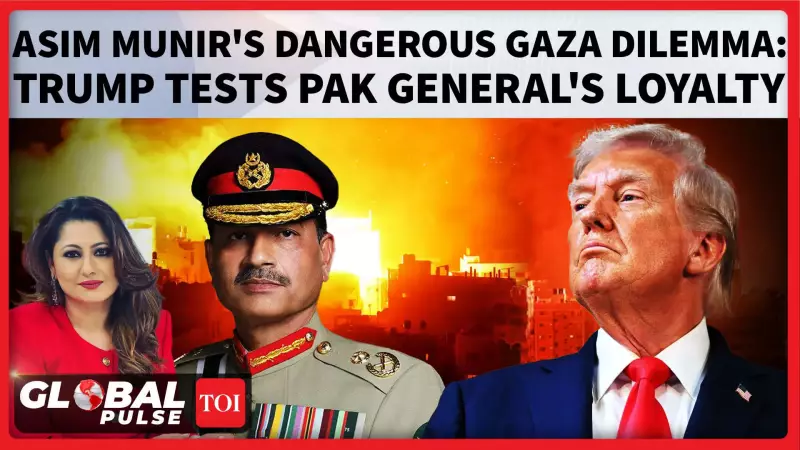
Pakistan's powerful military chief, Field Marshal Asim Munir, is facing a critical diplomatic and political test. The challenge comes from a direct request by United States President Donald Trump for Islamabad to contribute troops to a proposed international stabilisation force for Gaza.
The High-Stakes Washington Meeting
General Asim Munir is scheduled to fly to Washington in the coming weeks for a crucial meeting with President Trump. This will mark their third face-to-face meeting in just six months, highlighting the urgency and importance of the discussions. The central agenda is expected to be Trump's Gaza plan and Pakistan's potential role in it.
The US President's proposed 20-point Gaza peace plan calls for a coalition force from Muslim-majority nations. This force would oversee a transition period aimed at reconstruction and economic recovery in the Palestinian territory. Gaza has been decimated by over two years of intense Israeli military bombardment.

Why This is a Major Test for Munir
The demand places Army Chief Asim Munir in an extremely difficult position, caught between international pressure and domestic sentiment. Acceding to Trump's request could provide Pakistan with diplomatic leverage and potentially strengthen ties with the US administration. However, it carries a massive risk of sparking a severe domestic political backlash.
Public and political opinion in Pakistan has historically been strongly supportive of the Palestinian cause and deeply critical of Israeli actions. Deploying Pakistani troops as part of a US-backed plan, even for peacekeeping, could be portrayed as aligning with Washington's agenda against popular will. This could destabilise the current political setup and damage the military's carefully curated public image.
The Balancing Act: US Relations vs Home Front
For General Munir, often described as Pakistan's most powerful military chief ever, the decision involves navigating complex geopolitical currents. On one hand, maintaining a functional relationship with the United States remains a cornerstone of Pakistan's foreign and security policy. On the other, ignoring the potent domestic sentiment could have serious repercussions for stability at home.
The outcome of this test will significantly define the trajectory of US-Pakistan relations under Trump's renewed presidency and demonstrate the limits of Pakistan's military diplomacy. It also puts a spotlight on how Muslim nations respond to Western-led initiatives in conflict zones like Gaza. Will Pakistan agree to be a part of the solution, or will domestic pressures force it to decline? The world is watching as General Munir prepares for his pivotal trip to Washington.






