

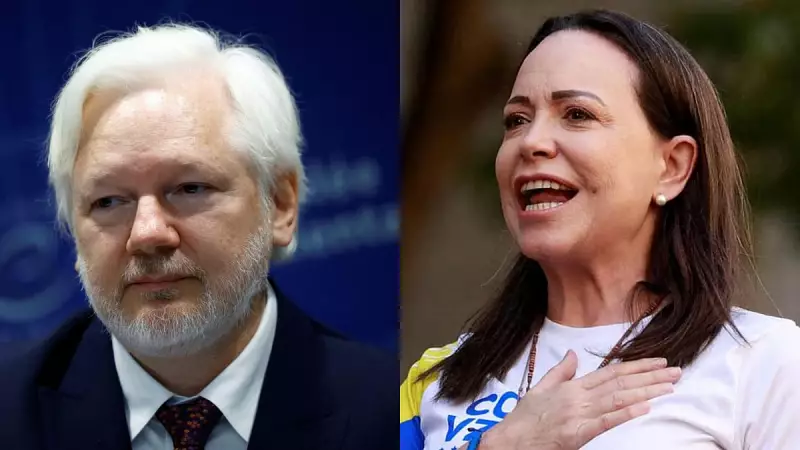
In a dramatic week for international awards and activism, two major stories have captured global attention. WikiLeaks founder Julian Assange has initiated legal action against the Nobel Foundation in Sweden, while Venezuelan opposition figure Maria Corina Machado has been honoured with a prestigious peace prize in Norway.
Julian Assange Takes Legal Action Against Nobel Committee
Julian Assange, the embattled founder of the secret-spilling platform WikiLeaks, has filed a lawsuit against the Nobel Foundation. The legal challenge, filed in a district court in Stockholm, Sweden, centres on the Foundation's refusal to disclose documents related to his nomination for the Nobel Peace Prize.
Assange's legal team argues that the Foundation has violated Swedish transparency laws by denying access to records concerning his nomination. The lawsuit specifically demands the release of documents that would confirm who nominated Assange and the subsequent deliberations by the Nobel committee. This legal move highlights the ongoing tension between Assange's supporters, who view him as a champion of press freedom, and institutions that have been cautious in their association with him.

The Australian publisher has been nominated for the Peace Prize multiple times, including in 2023. He remains incarcerated in the United Kingdom, fighting extradition to the United States on espionage charges related to WikiLeaks' publication of classified military and diplomatic documents. His wife, Stella Assange, has been a vocal advocate, stating that the Nobel recognition is crucial for highlighting his work and current plight.
Maria Corina Machado Honoured with Peace Prize
In a separate but symbolically significant event, Venezuelan opposition leader Maria Corina Machado was awarded the 2024 Professor Thorolf Rafto Memorial Prize in Bergen, Norway. This award is widely seen as a precursor to the Nobel Peace Prize and honours defenders of human rights and democracy.
Machado, a former lawmaker, was recognized for her courageous and unwavering fight for democracy and freedom in Venezuela. Despite being banned from holding public office by the government of President Nicolas Maduro, she emerged as the clear winner of the opposition's primary election in October 2023. The prize committee lauded her peaceful struggle under extremely difficult and dangerous conditions, where political opponents often face persecution.
The award ceremony is scheduled for November 2, 2024, in Bergen. This international recognition bolsters Machado's profile as a leading figure against Maduro's administration and brings renewed global focus to Venezuela's protracted political crisis.
Broader Implications and Reactions
These two developments, though distinct, underscore the powerful intersection of law, politics, and international recognition. Assange's lawsuit tests the boundaries of transparency for revered global institutions like the Nobel Foundation. A ruling in his favour could set a precedent for how such bodies handle scrutiny of their nomination processes.
For Maria Corina Machado, the Rafto Prize provides more than just moral support. It offers a vital platform on the world stage, potentially increasing diplomatic pressure on the Maduro regime ahead of the upcoming presidential election. The award signals to Venezuelans and the international community that her peaceful democratic resistance is being watched and supported.
The contrast is also striking: one figure seeks to force transparency through the courts regarding a prize, while another is celebrated for her transparent democratic mandate despite governmental obstruction. Both stories reflect ongoing global battles over information, governance, and the right to dissent.
As these narratives unfold, they will continue to spark debate about the role of international awards in activism, the limits of institutional secrecy, and the enduring fight for democratic principles in an increasingly complex geopolitical landscape.






