Astronaut's Speech Loss in Space Reveals Microgravity's Profound Impact on Human Physiology
Space is often imagined as a serene and silent expanse, but for astronauts living and working on the International Space Station (ISS), it can present unexpected physiological surprises. A recent incident involving veteran NASA astronaut Michael Fincke, who reported a temporary loss of his ability to speak, has refocused scientific attention on the profound effects of space on the human body. While this occurrence might sound alarming, researchers emphasize that such events, though not entirely predicted, are not unforeseen given the extreme environment of microgravity.
The human body is intricately designed to function within Earth's specific gravitational field. In the weightlessness of space, even fundamental actions like speaking can deviate from normal operation. Although the precise mechanisms behind this speech impairment remain under investigation, scientists are actively working to unravel the complex interplay of factors at play.
How Microgravity Influences Speech and Bodily Functions
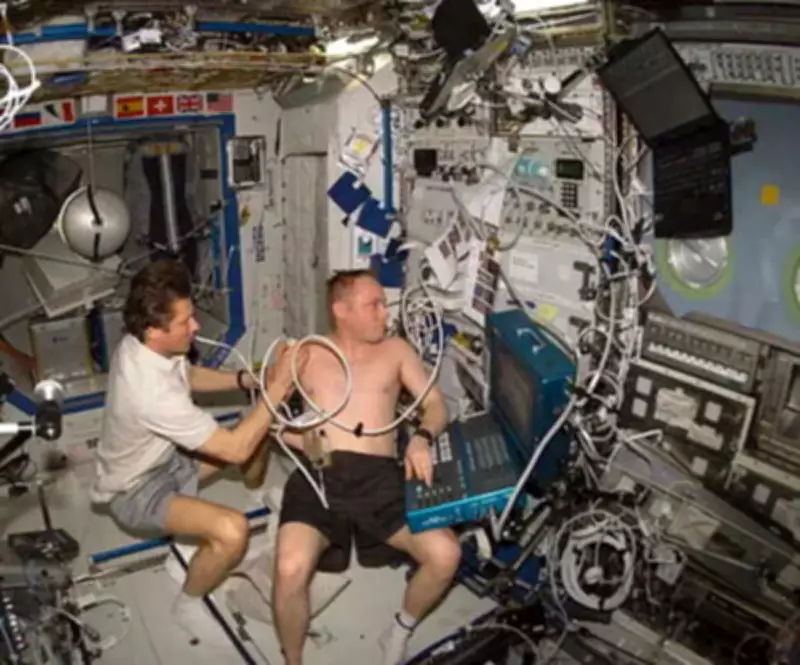
One of the most immediate effects astronauts experience in space is a significant shift of bodily fluids toward the upper body and head. On Earth, gravity ensures an even distribution of these fluids, but in microgravity, this balance is disrupted. NASA identifies this phenomenon as a fluid shift, which can lead to nasal congestion and altered facial appearance.

This fluid redistribution directly impacts communication. Speech is a delicate process involving coordinated airflow, vocal cord vibration, and resonance in the mouth and nasal cavities. Increased pressure in the head can modify an astronaut's voice, often making it sound softer or more nasal. Astronauts have frequently noted these vocal changes during missions, illustrating how subtle physiological adjustments can affect essential functions like communication.
Potential Causes Behind the Temporary Loss of Speech
The temporary inability to speak may stem from a combination of neurological and physical factors. Space travel is known to affect the central nervous system, altering how the brain transmits signals to the muscles required for speech. A study by the KTH Research Institute of Technology in Sweden demonstrated that microgravity impacts motor control and coordination, particularly during the initial adaptation phase.
Speaking demands high-level coordination of breathing, vocal cord movement, and articulation by the tongue and lips. Any impairment in these areas, even briefly, can result in speech difficulties. Additionally, psychological factors cannot be overlooked. Astronauts operate in confined spaces under immense responsibility, which can induce stress-related speech issues similar to those experienced on Earth.
Insights from Space Research on Physiological Adaptations
NASA's Human Research Program (HRP) has long focused on understanding the long-term effects of space travel on the human body. Research consistently shows that many changes in space—whether in muscle control, balance, or sensory perception—are part of the adaptation process. The brain must relearn how to function in weightlessness, temporarily affecting coordination and reaction times.
Importantly, most of these changes are reversible. The human body adapts to the space environment and typically returns to normal upon re-entry to Earth. There is no evidence suggesting that temporary speech problems cause permanent damage, highlighting the resilience of human physiology.
A Glimpse into the Complexity of Living in Space
This unusual incident serves as a stark reminder that space exploration is not merely a technological endeavor but also a profound biological challenge. The human body is finely tuned to Earth's conditions, and even minor environmental alterations can yield unexpected consequences.

While the exact cause of the temporary speech loss remains unclear, it underscores the necessity for further research as missions grow longer and more complex. As humanity prepares for journeys to the Moon and Mars, understanding these subtle yet significant effects becomes crucial. Incidents like this encapsulate the essence of space exploration: it is not just about reaching distant worlds but also about learning how humans can survive and thrive beyond our planet.