

Australia Fast-Tracks Autonomous Warfare Push in Air and Undersea Domains
Australia is quietly constructing one of the world's most ambitious autonomous warfare capabilities, with two homegrown programs, Ghost Shark and Ghost Bat, transitioning from prototype to production at a pace that has captured the attention of defense analysts globally. With the first Ghost Shark underwater drones scheduled to enter service this year and the Ghost Bat already achieving a live missile firing, Canberra is positioning itself as a serious contender in uncrewed military technology. This strategic push emerges amid escalating regional tensions and growing concerns over maintaining strategic balance in the Indo-Pacific.
Ghost Shark: Revolutionizing Undersea Warfare
The Ghost Shark program, launched in mid-2022, is a collaborative effort between the Royal Australian Navy, the Defence Science and Technology Group, and Anduril Australia. By April 2024, the first prototype was delivered ahead of schedule, highlighting the program's rapid progress. In September 2025, the Australian government approved a substantial A$1.7 billion five-year contract to build the initial batch of dozens of Ghost Sharks, with operational deployment anticipated in early 2026. This funding also encompasses maintenance and ongoing development initiatives.
Deputy Prime Minister and Defence Minister Richard Marles emphasized the significance of this advancement, stating, "This is the highest tech capability in the world. It exemplifies the fact that Australia is leading the world in terms of autonomous underwater military capabilities."

The Ghost Shark is an extra-large autonomous undersea vehicle, notably smaller than Australia's Collins-class submarines. It operates entirely on electric power, boasting a range of at least 3,200 kilometers, and can be deployed from shore or ships. Its missions are projected to include:
- Intelligence gathering
- Surveillance operations
- Mine-laying activities
- Anti-submarine support
These roles are particularly crucial in high-risk environments where crewed submarines would face heightened dangers. Analysts suggest that this platform could alleviate operational pressure on Australia's existing submarine fleet by assuming risky and persistent surveillance duties. It is not intended to replace future nuclear-powered submarines under the AUKUS pact but rather to bridge the capability gap until those platforms become operational in the 2030s and 2040s.
Industry leaders indicate that the system will continue evolving with enhanced autonomy, payloads, and weapons. The program is also stimulating domestic manufacturing, fostering a growing supply chain that involves dozens of Australian companies and creates hundreds of jobs.
Ghost Bat: Advancing Aerial Autonomous Capabilities
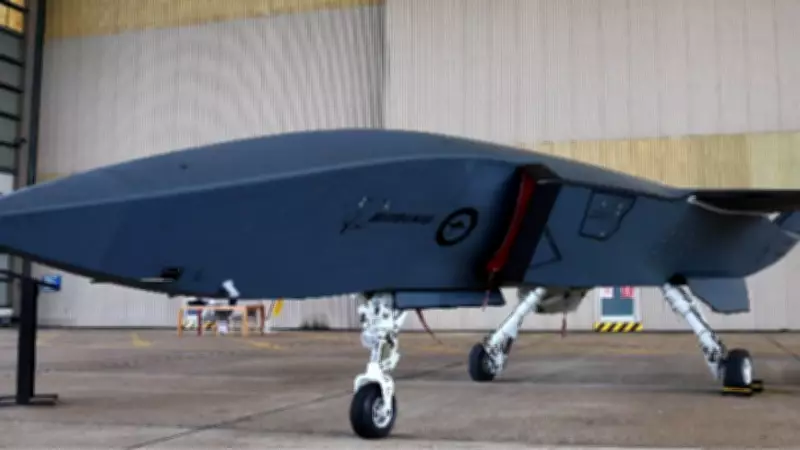
In parallel, Australia is progressing its aerial autonomous capability through the MQ-28 Ghost Bat, developed by Boeing's Australian arm. This aircraft is designed to operate alongside crewed fighters, extending their reach and improving situational awareness. The Ghost Bat first flew in March 2021, marking Australia's first domestically designed military aircraft in over five decades. Since then, development has accelerated, with the platform completing over 100 flights and demonstrating its ability to operate from active air force bases.
In a significant milestone, the aircraft successfully fired an air-to-air missile in December 2025, signaling progress toward potential combat deployment. The drone is capable of flying at near-sonic speeds, operating at high altitudes, and covering long distances, with a modular design that allows for rapid reconfiguration for various missions.
Military planners view the Ghost Bat as a key component of future air operations, especially for long-range missions aimed at securing supply lines and projecting power across extended distances. The broader program is expected to expand, with future variants potentially carrying heavier payloads. International interest is also emerging, with countries such as Germany exploring the platform as part of their own military modernization efforts.

While the current Australian government has not yet committed to fully arming the Ghost Bat, analysts argue that its operational potential will expand significantly once equipped with long-range weapons. Concurrently, there are concerns about managing costs to ensure the platform remains scalable and widely deployable.
Strategic Implications and Broader Defense Shift
Both Ghost Shark and Ghost Bat reflect a broader transformation in Australia's defense strategy. Facing a rapidly evolving security environment, Canberra is investing in systems that are numerous, cost-effective, and capable of operating autonomously, while also integrating closely with allied forces. These efforts are bolstered by the AUKUS partnership, particularly its focus on advanced capabilities such as autonomous systems. Joint exercises with the United States and the United Kingdom have already tested these technologies, with other regional partners showing keen interest.
As Australia accelerates development across air and undersea domains, these twin programs signal a clear strategic direction: building a flexible, technology-driven force capable of operating effectively in high-threat environments while minimizing risks to human personnel. This approach underscores Australia's commitment to maintaining a robust defense posture in an increasingly complex global landscape.





