

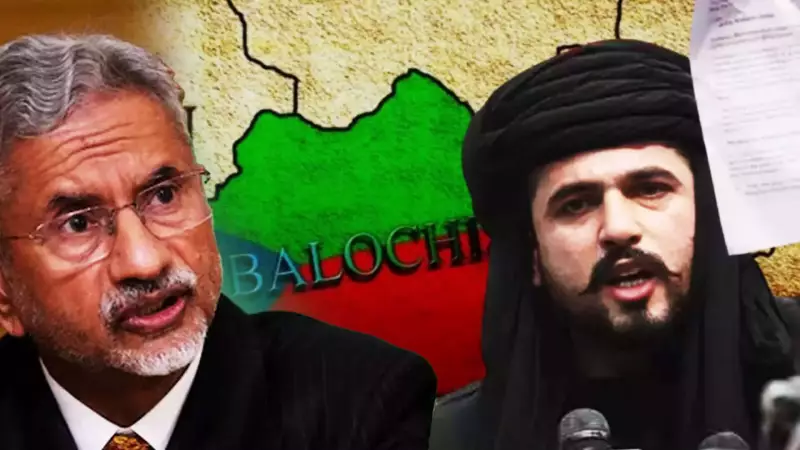
The start of 2026 has been marked by a significant political development emanating from Pakistan, with a Baloch leader publicly reaching out to India. In an open letter written from Pakistani soil, Baloch leader Mir Yar Baloch has extended New Year greetings to India's External Affairs Minister, Dr. S. Jaishankar, while expressing clear support for New Delhi.
A Direct Appeal for Cooperation
The letter, dated early January 2026, is not merely a greeting but a substantive diplomatic communication. Mir Yar Baloch explicitly voiced his support for India within the text. He referenced India's counter-terrorism actions, suggesting an alignment of interests on security matters. The core of his message included a call for direct cooperation between India and the people of Balochistan, framing it as a strategic necessity.
This communication reiterates Balochistan's declared political break from Pakistan, a stance that has been a cornerstone of the region's independence movement for years. The leader used the platform to outline planned initiatives for global diplomatic outreach, aiming to internationalize the Baloch cause and seek recognition beyond South Asia.

Warning on CPEC and Regional Shifts
A crucial part of the letter focused on regional geopolitics, particularly the China-Pakistan Economic Corridor (CPEC). Mir Yar Baloch issued a stark warning about the advanced stage of the multi-billion dollar CPEC project. He indicated concerns over future developments in the region linked to this corridor, which passes through Balochistan and has been a point of contention due to local objections over exploitation and lack of benefits.
The Baloch leader's decision to address India's top diplomat directly underscores the growing political churn within Pakistan's territorial boundaries. It signals that internal dissent is seeking external partnerships, potentially altering the diplomatic calculus in South Asia. The letter has successfully placed the long-standing Balochistan issue under a renewed international spotlight, inviting fresh scrutiny on Pakistan's internal affairs and its partnership with China.
Implications for Regional Diplomacy
This open letter represents more than a symbolic gesture; it is a calculated political move. By aligning with India and highlighting the perceived threats from CPEC, the Baloch leadership is attempting to reshape its struggle on the world stage. The appeal to New Delhi suggests a view of India as a potential counterweight to the Pakistan-China axis in the region.
For India, the letter presents both an opportunity and a challenge. It highlights the persistent instability within its western neighbour and offers a chance to gain moral and strategic leverage. However, it also requires careful diplomatic navigation to avoid overt escalation while acknowledging the sentiments expressed. The development confirms that the Balochistan issue remains a potent and active factor in the complex web of India-Pakistan relations as 2026 unfolds.






