

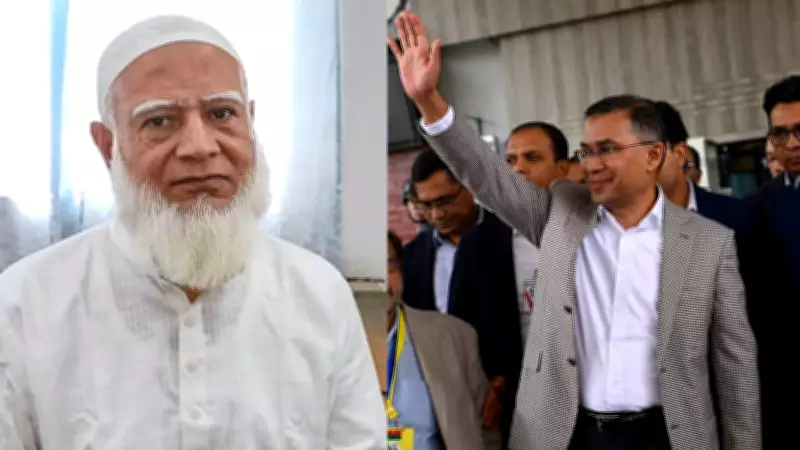
Bangladesh's 2026 Election: Jamaat vs BNP Manifesto Debate Heats Up
The political arena in Bangladesh is witnessing a significant escalation in tensions as the country gears up for its next general election in 2026. Two major opposition parties, Jamaat-e-Islami and the Bangladesh Nationalist Party (BNP), are locked in a fierce debate over their respective manifesto strategies, setting the stage for a highly contested electoral battle.
Clash of Ideologies and Strategies
Jamaat-e-Islami, a key Islamist political organization, has been actively pushing for a manifesto that emphasizes religious and conservative values, aiming to mobilize its traditional voter base. In contrast, the BNP, led by acting chairman Tarique Rahman, is focusing on a broader platform that includes economic reforms, governance issues, and democratic restoration, seeking to appeal to a wider spectrum of the electorate.
This ideological divide has sparked intense discussions within political circles, with both parties accusing each other of undermining national unity and stability. The debate is not just about policy differences but also reflects deeper historical and political rifts that have shaped Bangladesh's governance over the years.

Tarique Rahman's Role and Controversies
Tarique Rahman, who is currently living in exile, plays a pivotal role in the BNP's manifesto development and electoral strategy. His involvement has become a central point of contention, with Jamaat-e-Islami and other critics questioning his influence and the legitimacy of his leadership from abroad.
Supporters of the BNP argue that Rahman's vision is crucial for revitalizing the party and addressing key national issues, such as corruption and economic mismanagement. However, opponents view his role as divisive, potentially alienating moderate voters and complicating the party's efforts to form alliances.
Implications for Bangladesh's Political Future
The ongoing manifesto debate between Jamaat-e-Islami and the BNP has far-reaching implications for Bangladesh's political landscape. As the 2026 election approaches, the outcome of this clash could determine the direction of the country's policies on religion, economy, and international relations.
Analysts suggest that the ability of these parties to reconcile their differences or form strategic partnerships will be critical in challenging the ruling Awami League, which has maintained a stronghold in recent elections. The debate also highlights the challenges of balancing ideological purity with electoral pragmatism in a diverse and politically charged environment.
With tensions rising, stakeholders are closely monitoring developments, as the manifesto strategies of Jamaat-e-Islami and the BNP will not only shape their electoral fortunes but also influence Bangladesh's democratic trajectory in the coming years.






