

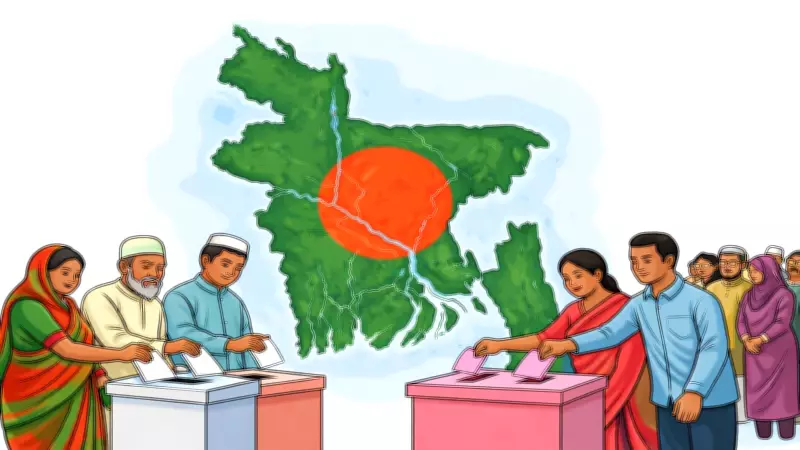
Bangladesh's Historic Dual Polls: Election and Referendum Set for February 2026
In a landmark development for South Asian democracy, Bangladesh is preparing for a transformative political event that will simultaneously shape its legislative future and constitutional framework. The nation will conduct its 13th Parliamentary Election on February 12, 2026, coupled with a nationwide referendum on the comprehensive July National Charter. This dual-polling initiative, announced by Chief Adviser Muhammad Yunus, represents the first general election following the removal of the Awami League government in August 2024.
The July National Charter: A Blueprint for Democratic Renewal
The July National Charter stands as an extensive reform framework aimed at dismantling what proponents describe as autocratic structures from previous administrations. Rather than an immediate constitutional amendment, this document serves as a political covenant endorsed by over 25 political parties, including significant entities like the BNP and Jamaat-e-Islami. The interim government has positioned this dual-voting day as a watershed moment to transition from mass uprising to what they term a Second Republic governed by enhanced institutional accountability.
The charter encompasses several pivotal reform pillars designed to reshape Bangladesh's governance:

- Executive Limits: Implementation of a 10-year maximum tenure (two-term cap) for the Prime Minister's office.
- Legislative Restructuring: Introduction of a bicameral Parliament featuring a 100-member Upper House to review legislation.
- Judicial and Electoral Independence: Restoration of the neutral Caretaker Government system for election oversight and empowerment of the Election Commission.
- Fundamental Rights Enhancement: Strengthened citizen protections and legal recognition for participants of the 2024 uprising, known as July Fighters.
Referendum Mechanics: A Single Bundled Question
Voters will receive two distinct ballots on election day: a white ballot for selecting their local Member of Parliament and a pink ballot specifically for the referendum. The referendum presents voters with a single, comprehensive question covering all four major reform areas outlined in the charter. According to Deputy Press Secretary Azad Majumdar, who confirmed details to Dhaka Tribune, there is no provision for selective approval of individual charter components. Voters must either accept or reject the entire reform package as presented.
The referendum question explicitly asks: Do you approve of the July National Charter (Constitution Amendment) Implementation Order, 2025, and the following proposals for constitutional reform as recorded in the July National Charter? A Yes vote constitutes consent to the complete charter, while a No vote rejects it entirely.
Comparative Analysis: Current vs. Proposed Constitutional Framework
The proposed changes represent significant departures from Bangladesh's existing constitutional structure:

- Parliament Structure: Transition from a unicameral Jatiya Sangsad (350 seats) to a bicameral system with a new 100-member Upper House.
- Executive Power: Introduction of term limits replacing the previous system with no restrictions on Prime Ministerial terms.
- National Identity: Shift from ethnic-based Bangalee citizenship definition to inclusive Bangladeshi identity encompassing all ethnic and linguistic minorities.
- Legislative Freedom: Modification of Article 70 to allow MPs to vote against party lines except on financial matters or no-confidence motions.
- Election Oversight: Restoration of neutral Caretaker Government system for general election supervision.
- Judicial Appointments: Establishment of an independent Judicial Appointments Commission led by the Chief Justice.
- Women's Representation: Implementation of candidate quotas to achieve 100 women's seats in the 400-member Parliament.
- Opposition Role: Formalized opposition participation through Deputy Speaker position and key committee chair assignments.
Potential Outcomes and Current Sentiment
The referendum's result will determine Bangladesh's constitutional trajectory for years to come. If the Yes vote prevails, the newly elected Parliament will function as a Constituent Assembly for its initial 180 days to formalize the charter into constitutional law. Conversely, a No victory would mean the incoming government bears no legal or moral obligation to implement the charter, potentially resulting in a return to the previous constitutional framework.
Recent opinion polling by Innovision Consulting indicates approximately 59.5% support for the Yes vote as of early February. However, with nearly 22% of voters remaining undecided, the final outcome appears highly responsive to last-minute campaigning efforts. The government has cited maximum voter participation and cost-efficiency as primary justifications for holding both votes concurrently, though this strategy has attracted considerable scrutiny regarding its complexity and potential impact on electoral legitimacy.
This historic political moment comes at a critical juncture for Bangladesh, as the nation seeks to redefine its democratic institutions while addressing longstanding governance challenges through comprehensive constitutional reform.





