

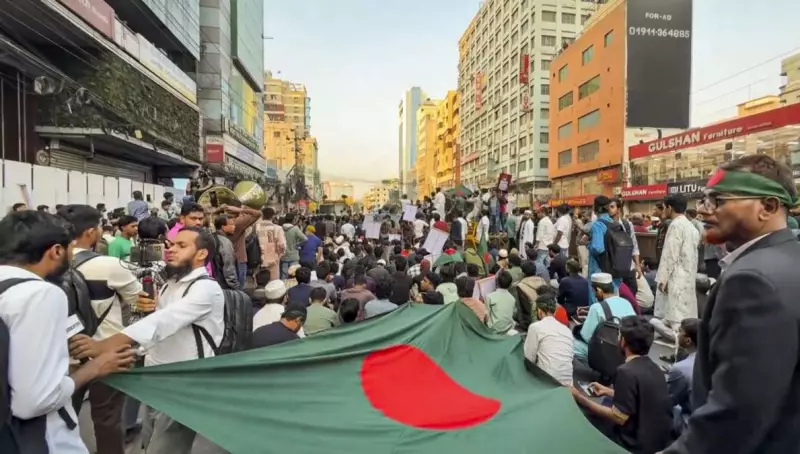
A high-level parliamentary committee has issued a stark warning, stating that the rapidly evolving political and humanitarian situation in neighbouring Bangladesh constitutes the most significant strategic challenge for India since the 1971 Liberation War. The report, presented by a panel chaired by Congress MP Shashi Tharoor, underscores the profound implications for India's national security, economic interests, and regional stability.
The Gravity of the Situation: Echoes of 1971
The panel's assessment, detailed in a report presented to Parliament on December 18, 2025, draws a direct parallel to the historic events of 1971. That year, India faced a monumental crisis with the influx of millions of refugees from East Pakistan (now Bangladesh) and the subsequent war that led to the creation of a new nation. The committee suggests the current volatility in Bangladesh, marked by political unrest and a severe humanitarian crisis, presents a challenge of a similar strategic magnitude.
The report highlights that India is already witnessing the early signs of this challenge, with a steady flow of people crossing the porous border seeking refuge. This movement threatens to strain resources in bordering Indian states and could destabilize the delicate social fabric of the entire eastern region.

Key Findings and Multifaceted Threats
The parliamentary committee, officially the Parliamentary Standing Committee on External Affairs, outlined a comprehensive view of the threats emanating from the crisis. The analysis goes beyond immediate border management to encompass long-term strategic concerns.
First, the panel emphasized the direct national security threat. A destabilized Bangladesh could become a fertile ground for extremist elements and transnational crime networks, which could easily spill across the border into India's vulnerable northeastern states.
Second, the economic repercussions are severe. Bangladesh is a crucial trade and connectivity partner for India's 'Act East' policy. Projects like cross-border energy grids, road and rail links, and port development are now at risk. Disruption in Bangladesh would directly impact India's economic ambitions and regional trade corridors.
Third, the humanitarian dimension is escalating into a major crisis. The committee noted the urgent need for a coordinated policy to manage potential large-scale refugee movements, which would require immense logistical, financial, and diplomatic resources.
Call for Proactive and Nuanced Diplomacy
The Tharoor-led committee did not just outline the problems but also urged the government to adopt a more dynamic and proactive diplomatic approach. It cautioned against a passive or reactive stance, given the high stakes involved.
The report suggests that India must engage with all significant stakeholders within Bangladesh to encourage dialogue and a peaceful political resolution. It implicitly warns that taking sides in the internal conflict could be counterproductive in the long run. Furthermore, the panel stressed the importance of coordinating with other regional and global powers who have an interest in the stability of the Bay of Bengal region, while safeguarding India's primary strategic interests.
The underlying message is clear: India's response to the Bangladesh crisis will be a defining test of its foreign policy maturity and its capacity as a regional leader. The choices made today will have consequences for decades, much like the decisions of 1971. The parliamentary panel's report serves as a crucial, non-partisan alert to the nation about the scale of the challenge unfolding at its doorstep.






