

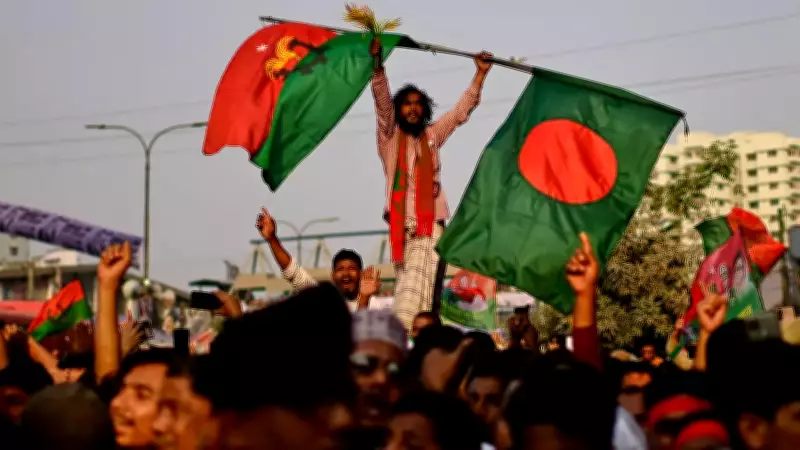
Bangladesh's Crucial February 12 Election: A Pivotal Moment for Regional Dynamics
Bangladesh is poised to hold its general election on February 12, a democratic exercise that carries profound implications not only for the nation itself but also for its neighbor, India. This electoral event is set to shape the political landscape of South Asia, with India closely monitoring the outcomes due to its strategic, economic, and security interests in the region.
Historical Context and Bilateral Relations
The relationship between India and Bangladesh has evolved significantly over the decades, marked by cooperation in areas such as trade, security, and infrastructure development. Under the leadership of Prime Minister Sheikh Hasina, bilateral ties have strengthened, with India being a key partner in Bangladesh's economic growth. However, the election introduces an element of uncertainty, as a change in government could potentially alter the trajectory of this partnership.
Key Stakes for India in the Election Outcome
India's stakes in the Bangladesh election are multifaceted, encompassing geopolitical, economic, and security dimensions. A stable and friendly government in Dhaka is crucial for India's regional strategy, particularly in countering terrorism and managing cross-border issues. Economically, Bangladesh is a significant trading partner, and any political instability could impact bilateral trade agreements and investment flows.

The election outcome will influence the balance of power in South Asia. India seeks to maintain a government in Bangladesh that aligns with its interests, especially in light of China's growing influence in the region. A pro-India administration could enhance cooperation on regional security initiatives, while a shift in political alignment might complicate India's strategic calculations.
Security and Border ManagementSecurity cooperation between India and Bangladesh has been a cornerstone of their relationship, with joint efforts to combat terrorism and manage the porous border. The election result could affect the continuity of these initiatives, as new leadership might reassess security policies. India is particularly concerned about the potential for increased cross-border militancy or changes in border management protocols.
Economic Ties and Development Projects
India has invested heavily in Bangladesh's infrastructure and development projects, such as the construction of roads, railways, and ports. These initiatives are part of India's broader strategy to enhance connectivity in South Asia. The election could impact the progress of these projects, depending on the new government's priorities and its willingness to collaborate with India.
- Trade Relations: Bangladesh is one of India's largest trading partners in South Asia, with bilateral trade exceeding billions of dollars annually. Political changes might lead to renegotiations of trade agreements or tariffs, affecting economic ties.
- Investment Flows: Indian companies have significant investments in Bangladesh, particularly in sectors like textiles and pharmaceuticals. Election-induced uncertainty could deter future investments or disrupt existing operations.
- Regional Connectivity: Projects aimed at improving regional connectivity, such as the Bangladesh-Bhutan-India-Nepal (BBIN) initiative, rely on stable political environments. The election outcome will determine Bangladesh's commitment to such multilateral efforts.
Domestic Politics in Bangladesh and Its Impact
The election is not just about international relations; it also reflects Bangladesh's internal political dynamics. Issues such as governance, human rights, and economic development are at the forefront of the electoral debate. India's response to the election will be shaped by how these domestic factors align with its own interests, including the promotion of democratic values and stability in the region.

- Democratic Stability: India has a vested interest in seeing a peaceful and credible election process in Bangladesh, as political instability could spill over into regional conflicts or refugee crises.
- Human Rights Concerns: The treatment of minorities and political opponents in Bangladesh is a matter of concern for India, given its own diverse population and commitment to human rights.
- Economic Policies: The new government's economic policies will influence Bangladesh's growth trajectory, which in turn affects regional economic integration and India's trade prospects.
In conclusion, Bangladesh's election on February 12 is a critical event with far-reaching consequences for India. As the results unfold, India will be assessing the implications for its regional strategy, economic partnerships, and security arrangements. The outcome will not only determine the future of Bangladesh but also shape the geopolitical landscape of South Asia, making it a pivotal moment for bilateral relations and regional stability.





