

Bangladesh's Critical Election: A Nation at a Crossroads
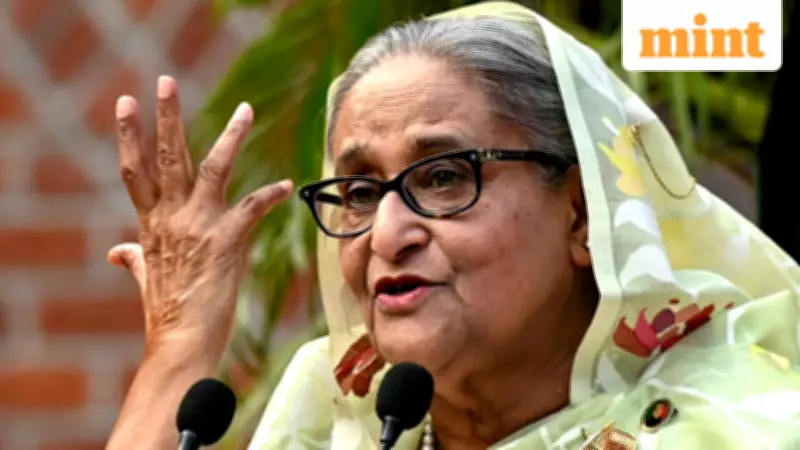
This Thursday, Bangladesh heads to the polls in a pivotal election that could determine whether the country reverts to being labeled a "basket case," a term famously coined by Henry Kissinger decades ago. The vote marks the first election since former Prime Minister Sheikh Hasina fled to India in 2024 amid widespread student protests, ending her 15-year tenure. The outcome carries profound implications not only for Bangladesh's 175 million people but for regional stability and the global perception of moderate Islam.
Economic Miracle Under Authoritarian Rule
During Sheikh Hasina's long rule, Bangladesh achieved remarkable economic progress, often dubbed the "Bangladesh miracle." The nation dramatically reduced extreme poverty and emerged as the world's second-largest garment exporter, trailing only China. Rising per capita income and improved human-development indicators transformed this once dirt-poor, disaster-prone land into a middle-income country, showcasing grit and tenacity on a global stage.
However, this economic success came at a steep political cost. Hasina's government was widely criticized as despotic, with corruption flourishing, civil liberties shrinking, and opposition voices suppressed under sustained pressure from her Awami League party. Independent observers noted that elections under her leadership were marred by rigging and opposition boycotts, rendering them meaningless for many citizens. The Bangladesh Nationalist Party (BNP) notably boycotted polls in both 2014 and 2024.

A Troubled Transition and Rising Extremism
Hasina's ouster in August 2024 initially sparked optimism in the West, with The Economist naming Bangladesh "Country of the Year" and praising moves toward a more liberal government. Her successor, interim leader Muhammad Yunus—a microfinance pioneer and Bangladesh's sole Nobel laureate—was expected to restore normalcy. Instead, his tenure has been marked by mob violence and a resurgence of hard-line Islamism.
Yunus reversed a ban on the Jamaat-e-Islami, an organization akin to the Muslim Brotherhood in the subcontinent, despite its documented role in massacres during the 1971 war of liberation. His government included Jamaat sympathizers while banning the Awami League and jailing thousands of its supporters under harsh antiterrorism laws. Scores of violent Islamists were released on bail, including perpetrators of machete attacks on atheist bloggers.
The caretaker regime has targeted secular intellectuals and artists, imprisoning figures like 75-year-old journalist Shahriar Kabir and briefly detaining actress Nusraat Faria for portraying Hasina in a biopic. Islamist mobs have burned down cultural institutions like the Udichi art academy and Chhayanaut performing-arts school, as well as newspaper offices of Prothom Alo and the Daily Star. In a grim incident, a 27-year-old Hindu garment worker was beaten to death, hung from a tree, and set ablaze over blasphemy accusations.
As Mahfuz Anam, longtime editor of the Daily Star, noted after the attack on his newspaper, "Freedom of expression is no longer the main issue. Now it is about the right to stay alive." This statement underscores the severe deterioration in civil liberties under Yunus's rule.
The Front-Runner: A Controversial Figure
The election front-runner is 60-year-old BNP chairman Tarique Rahman, who represents the dynastic politics that many educated Bangladeshis disdain. His father served as president from 1977 to 1981, and his mother, Khaleda Zia, was prime minister three times. Rahman's career has been shadowed by controversy; leaked U.S. diplomatic cables from 2008 and 2009 described him as "widely considered one of the most corrupt individuals in Bangladesh."
During Hasina's tenure, courts convicted Rahman of money laundering, involvement in a 2004 grenade attack on Hasina, and embezzling orphanage funds, among other crimes. After 17 years in self-imposed exile in London, he returned to Bangladesh in December, only to have all charges cleared following Hasina's downfall. In a retaliatory move, courts sentenced Hasina to death in absentia.

Regional and Global Implications
Bangladesh's stability is crucial beyond its borders. As the fourth-largest Muslim-majority nation globally, a radicalized Bangladesh would be a significant setback for moderate Islam worldwide. Moreover, instability could adversely affect India, the region's largest economy, which has previously battled Bangladesh-based terrorist groups and insurgents in its northeastern states.
If Rahman wins the election, his immediate challenges will include restoring law and order, rebuilding investor confidence, and repairing strained ties with India, which have deteriorated since Hasina's ouster. Optimists hope he can keep the Islamist Jamaat at bay, but failure to address these priorities could validate Kissinger's bleak characterization of Bangladesh as a "basket case."
As Bangladeshis cast their votes, they face unenviable choices between dynastic politics and the threat of extremism. The election's outcome will not only shape the nation's trajectory but also test whether its hard-won economic gains can survive the turbulent waves of political change.





