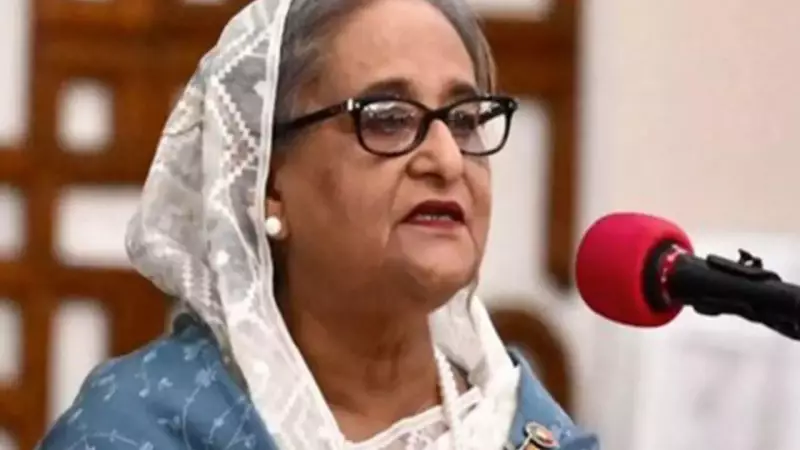
Bangladesh Government Holds Sheikh Hasina and Awami League Responsible for Election Violence Threats
The government of Bangladesh, led by Nobel laureate Muhammad Yunus, has issued a stern warning that it will hold former Prime Minister Sheikh Hasina and her banned political party, the Awami League, directly accountable for any incidents of violence or terrorism occurring in the lead-up to and during the crucial parliamentary elections scheduled for February 12. This declaration comes just days after Hasina herself launched a scathing verbal attack against Yunus, accusing his administration of plunging Bangladesh into what she described as an "era of terror, lawlessness, and democratic exile."
Foreign Ministry Expresses Shock Over Hasina's Delhi Address
In an official statement released on Sunday, the Bangladesh Ministry of Foreign Affairs expressed profound "surprise and shock" that Sheikh Hasina was permitted to deliver a public address in New Delhi last Friday. The ministry highlighted that Hasina has been convicted by the Bangladesh International Crimes Tribunal for crimes against humanity and has received a death sentence, making her appearance at an international forum particularly contentious.
"Bangladesh is deeply aggrieved that while India is yet to act on its obligations to hand Hasina over to Bangladesh under the bilateral extradition agreement despite repeated requests, she has instead been allowed to make such inciteful pronouncements from its own soil," the ministry's statement read. This remark underscores the growing diplomatic tension between the two neighboring nations over the handling of the former prime minister.

Hasina's Audio Message Accuses Yunus of Running Illegal Regime
In her first public address since leaving Bangladesh in 2024, delivered via an audio message to a gathering in Delhi, Sheikh Hasina launched a fierce critique of Muhammad Yunus. She accused the Nobel laureate of presiding over an "illegal and violent" government and framed the current political turmoil in Bangladesh as an existential struggle for the nation's sovereignty and constitutional integrity.
Hasina explicitly called upon her supporters to mobilize and "overthrow the foreign-serving puppet regime," a statement that the Bangladesh government has interpreted as a direct incitement to violence. The foreign ministry's response was unequivocal: "She has openly called for the removal of the Government of Bangladesh and issued blatant incitements to her party loyalists and general public to carry out acts of terror in order to derail the upcoming general elections in Bangladesh."
Government Vows Action Against Awami League's Activities
The statement further elaborated that the "unabashed incitements" by the Awami League's leadership serve as a clear justification for the interim government's decision to ban the party's activities. Bangladesh authorities have asserted that they will hold this political outfit responsible for any violent or terror-related incidents occurring in the election period and will implement appropriate measures to thwart what they term as "evil conspiracies."
Additionally, the government criticized the Indian capital for hosting the event, stating that allowing "mass murderer" Hasina to deliver such hate speech violates established norms of interstate relations. This adds another layer of complexity to the bilateral dynamics, as India navigates its diplomatic responsibilities while managing internal political expressions.
As Bangladesh approaches its pivotal elections, these escalating accusations and counter-accusations between the Yunus-led government and Sheikh Hasina's faction highlight the deep political divisions and the potential for increased instability in the region. The international community watches closely, with concerns mounting over the implications for democratic processes and regional security.