Bangladesh has issued a firm rebuttal to India's recent expression of concern regarding the safety of minority communities within its borders. The diplomatic response came on Sunday, December 29, 2025, following statements from India's Ministry of External Affairs (MEA) which described ongoing violence against minorities as a "matter of grave concern."
India's Expression of Grave Concern
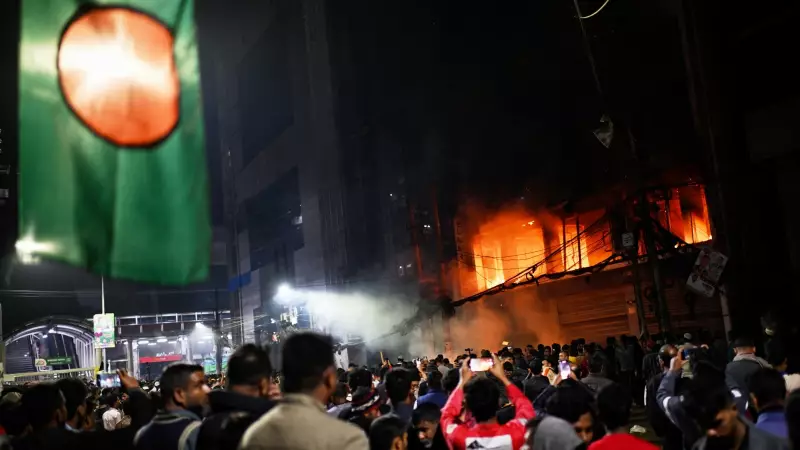
The exchange was triggered by a series of violent incidents in Bangladesh. On Friday, December 27, the official spokesperson for India's MEA, Randhir Jaiswal, addressed the media regarding two specific cases. The first involved the killing of Dipu Chandra Das, a Hindu youth who was lynched by a mob in Mymensingh on December 18 over alleged blasphemy. Shockingly, his body was subsequently set on fire.
When questioned about another incident—the death of a youth named Amrit Mondal in Rajbari—Jaiswal broadened the scope of India's concern. He stated that "the unremitting hostilities against the minorities in Bangladesh including Hindus, Christians and Buddhists is a matter of grave concern." This formal weighing-in by the Indian government placed the issue squarely on the bilateral agenda.

Bangladesh's Firm Rejection and Counter-Narrative
In a detailed statement released on Sunday, the Bangladesh Ministry of Foreign Affairs directly responded to Jaiswal's comments. The government asserted that his remarks "do not reflect the facts" and categorically rejected what it called "inaccurate, exaggerated, or motivated narratives."
Bangladesh emphasized its "longstanding tradition of communal harmony" and argued that isolated criminal acts were being misrepresented. The statement expressed concern over "systematic attempts to portray the isolated incidents of criminal acts as systemic persecution." It further alleged that these narratives were being "maliciously used to propagate anti-Bangladesh sentiments in different parts of India."
Significantly, the Bangladeshi statement provided a contrasting account of one of the cited cases. Regarding Amrit Mondal, it claimed he was "a listed criminal whose unfortunate death happened when he was committing extortion with his Muslim accomplice, who was later arrested." This portrayal starkly differed from the context implied in the MEA's query.
Strain on Diplomatic Ties and the Road Ahead
This public disagreement highlights a sensitive point in India-Bangladesh relations. The Bangladeshi government perceives a "selective and unfair bias" in sections of Indian discourse, where isolated incidents are amplified to negatively influence public opinion against Dhaka. For India, the protection of minority rights in the neighbourhood remains a consistent and vocal part of its foreign policy posture.
The exchange occurs against a backdrop of broader regional dynamics and domestic politics in both nations. While diplomatic channels remain open, the public nature of this disagreement underscores the complexities of managing close yet occasionally fraught bilateral ties. The focus now will be on whether this remains a war of words or leads to further diplomatic steps to address the underlying issues of communal violence and narrative control.