

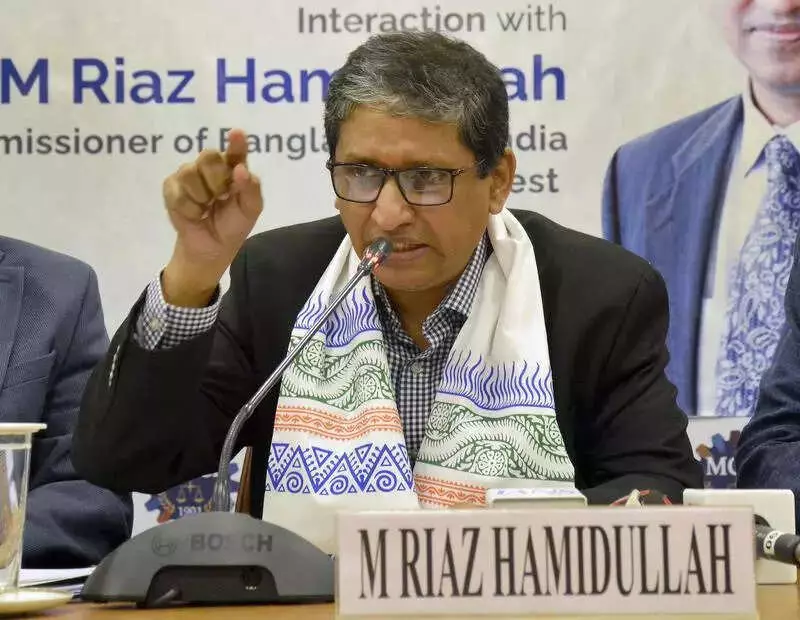
In a significant diplomatic overture, Bangladesh's High Commissioner to India, Muhammad Riaz Hamidullah, has articulated a vision for a "new canvas" of shared future between the two neighbouring nations. This comes against the backdrop of recent warming ties, highlighted by Prime Minister Narendra Modi's outreach offering support for Bangladesh's ailing former Prime Minister, Khaleda Zia.
A Vision for a Shared Future
Speaking at an interactive session organized by the Merchants' Chamber of Commerce and Industry (MCCI) in Kolkata on Wednesday, High Commissioner Hamidullah outlined the ambitious effort. "The effort is to articulate a new canvas where we can look at a shared future," he stated. He acknowledged the challenges, noting it is "easier said than done but it is possible," given the presence of divergent views and sensitive issues on the table. The envoy, who assumed his role in New Delhi eight months ago, emphasized that focusing on a single aspect would not do justice to the complex and multifaceted relationship.
Economic and People-Centric Foundations
Hamidullah described the India-Bangladesh bond as "organic," underpinned by deep people-to-people connections. He highlighted the robust economic engagement, which exceeds $25 billion annually when sectors like tourism are considered. Pointing to a Reserve Bank of India (RBI) report from August 2025 that suggested a 12% increase in trade, he qualified the relationship as one of "mutual interdependence." The envoy also stressed that Bangladesh has not restricted the mobility of Indian citizens, reinforcing the people-centric anchor of the ties.

Cultural Diplomacy and Wider Engagement
Signalling a clear intent to broaden the scope of cooperation, Dhaka is leaning on cultural diplomacy and tourism. Hamidullah revealed plans for a Bengali film festival in New Delhi next year. He also suggested facilitating tours for people in India, particularly West Bengal, to visit their ancestral places in Bangladesh. These initiatives, coupled with a push for deeper economic integration and port capacity expansion, indicate a strategic move to navigate the current sensitive phase in bilateral relations by widening the canvas of engagement.
The envoy's remarks, following Bangladesh's earlier statement that its ties with India would not be stuck on one issue, reflect a concerted effort from both sides to mend fences and build a more comprehensive partnership for the future.






