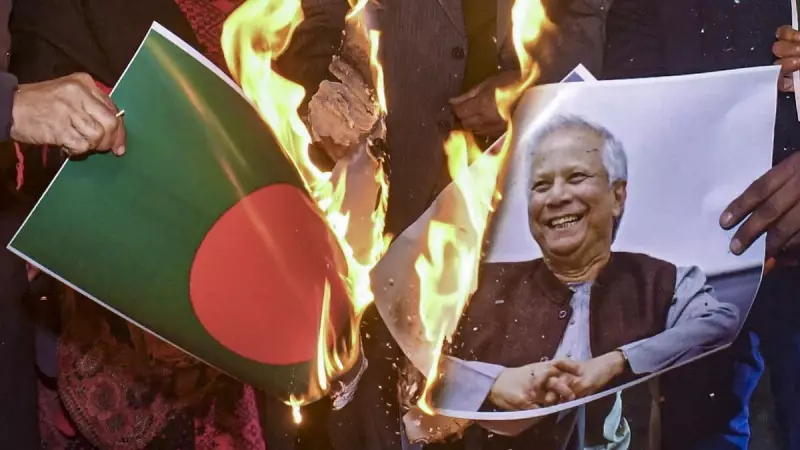
The recent wave of political and social unrest in neighbouring Bangladesh has emerged as a significant strategic challenge for India, testing its diplomatic acumen and internal security preparedness. The turmoil, which has intensified in recent months, lays bare a concerning vacuum of state authority and the potential for radical forces to mobilise, with direct implications for the stability of India's sensitive northeastern region.
A Vacuum of Authority and Rising Instability
Analyst K S Tomar, in his assessment dated 23 December 2025, highlights that the core of the crisis stems from a palpable erosion of governmental control. The situation is not merely a political standoff but reflects deeper systemic fractures. As state institutions struggle to assert authority, various non-state actors, including groups with radical ideologies, find fertile ground for recruitment and organisation. This internal destabilisation in Bangladesh directly contravenes India's fundamental interest in having a peaceful and stable periphery.
Direct Threats to India's Northeastern Frontier
The most immediate concern for New Delhi is the spill-over effect into the contiguous states of Northeast India. This region, with its complex history of insurgency and ethnic tensions, remains vulnerable to external influences. The unrest in Bangladesh creates a potential corridor for the movement of militants, illicit arms, and radical propaganda. Security establishments in India are closely monitoring the situation, wary of historical precedents where instability across the border has fueled similar tensions within India's own territory. The porous and densely populated border presents a formidable challenge to surveillance and control.
Diplomatic Tightrope and Future Implications
India's response to the crisis requires walking a diplomatic tightrope. On one hand, it must engage with the legitimate government in Dhaka to encourage stability and counter-terror cooperation. On the other, it must avoid any perception of overt interference in Bangladesh's internal affairs, which could be counterproductive. The long-term implications are profound. A prolonged period of instability in Bangladesh could jeopardise joint economic projects, disrupt vital cross-border trade and connectivity initiatives, and force India to divert substantial security resources to its eastern frontier, impacting its broader strategic posture.
In conclusion, the unrest in Bangladesh is more than a neighbour's internal problem; it is a direct test of India's neighbourhood-first policy and its capacity to insulate its own territory from regional shocks. The vacuum of authority and radical mobilisation highlighted by K S Tomar demand a nuanced, firm, and proactive response from Indian policymakers to safeguard national security interests, particularly in the fragile Northeast.