

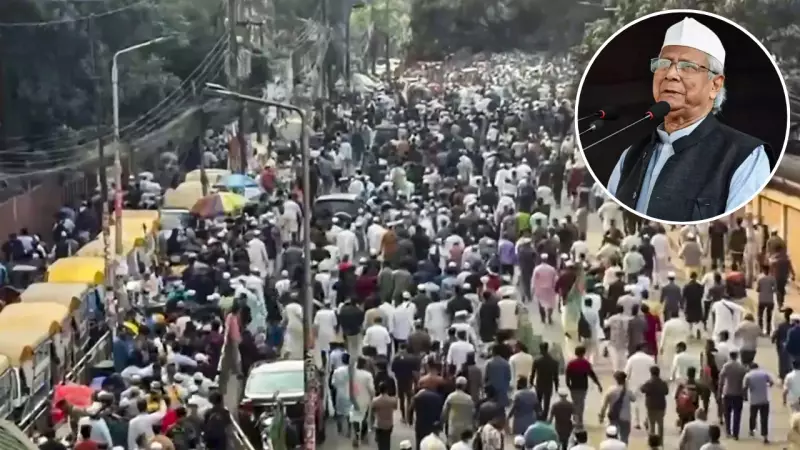
Diplomatic relations between India and Bangladesh have encountered a fresh obstacle following the assassination of a prominent youth leader in Dhaka, which ignited a wave of anti-India demonstrations. The killing of Sharif Osman Hadi, a key figure in last year's July uprising that ousted Sheikh Hasina's government, has plunged Bangladesh into political turmoil just weeks before scheduled elections.
Protests Trigger Diplomatic Fallout
The immediate consequence of the widespread protests was the suspension of visa services by the Bangladesh government. Bangladesh halted visa operations at its High Commission in New Delhi and its missions in Tripura and Siliguri, citing unavoidable circumstances. This move came after demonstrators gathered outside Bangladeshi diplomatic offices in India. In a tit-for-tat action, India had previously suspended visa services at its mission in Chittagong after protesters tried to storm the compound.
India has formally expressed its apprehensions to Dhaka. New Delhi summoned the Bangladeshi envoy to raise strong concerns over the safety of minority communities and the security of its diplomatic missions. The Indian Ministry of External Affairs also dismissed narratives about security breaches at the Bangladesh High Commission in Delhi as misleading, stating the protests there were brief and controlled. India urged Bangladesh to bring to justice the perpetrators behind the lynching of a Hindu man, Dipu Chandra Das.

Election Promises Amid Rising Violence
Interim Chief Advisor Muhammad Yunus, in a half-hour phone call with US Special Envoy Sergio Gor, reaffirmed his commitment to holding general elections on February 12. He described the vote as a chance to restore democratic legitimacy and promised a free and fair process. However, he simultaneously warned that supporters of the ousted Awami League were allegedly spending millions to sabotage the electoral process, with a fugitive leader inciting violence from abroad.
The political violence appears to be spreading. Days after Hadi's death, another youth leader from the July uprising, Motaleb Shikder, was shot in the head in Khulna. Police have launched a manhunt but remain unclear on the motive, deepening fears of a coordinated campaign against protest figures. The platform Hadi led, Inqilab Moncho, has issued a 24-hour ultimatum for justice, threatening a mass movement to oust the interim government if demands for an international probe are not met.
Regional Repercussions and Accusations
The unrest has significant implications for regional diplomacy. Bangladesh's interim government indicated it may review and potentially scale back its diplomatic presence in New Delhi if the situation deteriorates further. Foreign affairs adviser M Touhid Hossain strongly rejected India's press note on the protests, calling it misleading propaganda.
From exile in India, former Prime Minister Sheikh Hasina squarely blamed Yunus for the instability, accusing his interim government of empowering extremists, failing to protect minorities, and damaging ties with India. She asserted that relations would normalize only after legitimate governance is restored in Dhaka.
Adding to the crisis, Bangladeshi media houses like Prothom Alo and The Daily Star faced violent attacks from mobs, forcing a temporary halt in print publication for the first time in 27 years for Prothom Alo. Yunus condemned these assaults on press freedom, and authorities have identified 31 suspects.
The assassination of Sharif Osman Hadi, who was shot at close range in Dhaka's Bijoynagar area and later died in Singapore, has thus become a catalyst, exposing deep political fractures and testing the fragile state of India-Bangladesh relations during a critical electoral transition.






