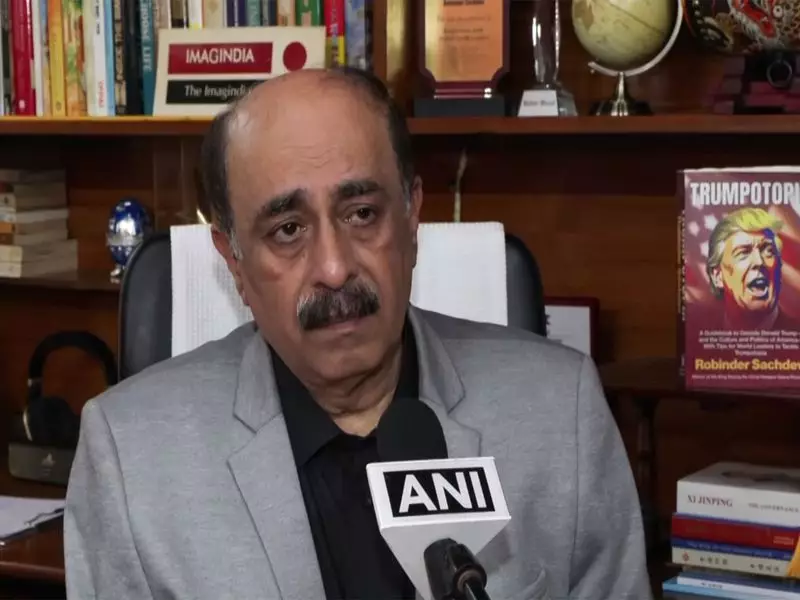
The passing of Ziaur Rahman, the former President of Bangladesh and husband of ex-Prime Minister Khaleda Zia, has been described by a leading foreign affairs expert as the definitive "end of an era" in the nation's complex political landscape. Dr. Smruti S. Pattanaik, a respected scholar at the Manohar Parrikar Institute for Defence Studies and Analyses (MP-IDSA) in New Delhi, offered this poignant assessment, highlighting the profound symbolic closure his death brings to a significant chapter in Bangladesh's history.
A Pillar of the BNP and a Fading Political Symbol
Ziaur Rahman, who breathed his last in a Dhaka hospital on May 5, 2024, was more than just a former first gentleman. He was a foundational pillar of the Bangladesh Nationalist Party (BNP), the major opposition force, and a constant figure beside its chairperson, Khaleda Zia, through decades of turbulent politics. Dr. Pattanaik emphasized that his presence represented a living link to the party's origins and the legacy of its founder, former President Ziaur Rahman, after whom he was named.
His prolonged illness and eventual death effectively mark the conclusion of the direct Zia family's active political narrative within the BNP's framework. With Khaleda Zia herself in frail health and largely out of public life, and their son, Tarique Rahman, living in exile, the party now faces its future without its central familial symbols. This transition, as per the expert, forces the BNP to confront a post-dynastic reality and reinvent its political identity.

Implications for Bangladesh's Domestic Politics
The void left by Ziaur Rahman's death creates immediate and long-term challenges for the BNP. Dr. Pattanaik pointed out that the party, already struggling with leadership issues and government pressure, has lost a key unifying figure. His absence may intensify internal struggles for direction and control, potentially weakening the opposition's cohesion against the formidable ruling Awami League under Prime Minister Sheikh Hasina.
This development could lead to a further consolidation of the Awami League's position, altering the dynamics of Bangladesh's democratic process. The expert suggests that the BNP must now look beyond the Zia family to build a broad-based leadership and a policy-driven agenda if it hopes to remain a relevant political force.
India-Bangladesh Relations in a New Context
From a strategic perspective, Dr. Pattanaik's analysis extends to the implications for India. The BNP, historically perceived as having a more complex stance towards New Delhi compared to the Awami League, is at a crossroads. The weakening of its traditional leadership core could lead to unpredictable shifts in its foreign policy outlook.
For India, a stable and friendly Bangladesh is a key strategic priority. While the current government under Sheikh Hasina has fostered strong ties, a robust and constructive opposition is also part of a healthy democratic ecosystem. The transformation within the BNP will be closely watched in New Delhi to understand future political currents and their potential impact on bilateral relations, security cooperation, and regional connectivity projects.
In essence, the death of Ziaur Rahman is not merely a personal tragedy but a significant political milestone. It signals the closing of a familial era in Bangladeshi opposition politics and opens a period of uncertainty and potential reconfiguration. As Dr. Smruti S. Pattanaik concludes, how the BNP navigates this transition will have important consequences not only for Bangladesh's domestic democracy but also for the geopolitical balance in South Asia.