

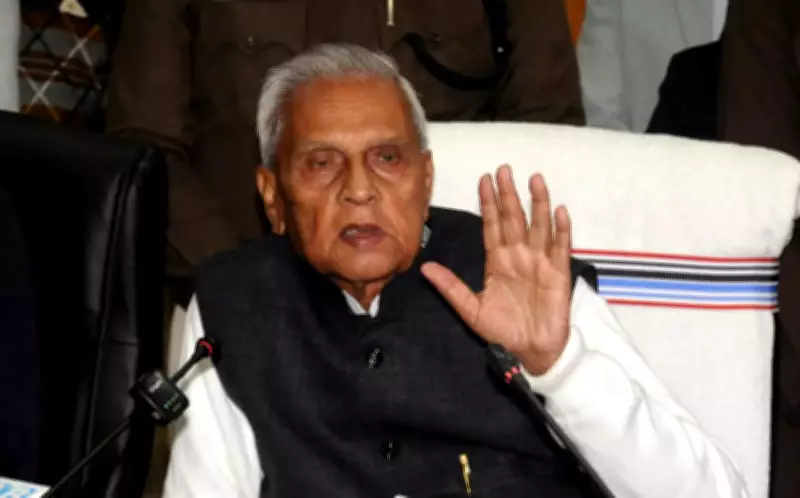
Patna witnessed a significant budgetary announcement on Tuesday as the Bihar government unveiled its financial plan for the fiscal year 2026-27. State Finance Minister Bijendra Prasad Yadav presented the budget in the assembly, highlighting a strong emphasis on the education sector, which received the largest portion of the total expenditure.
Education Sector Dominates Budgetary Allocations
The combined allocation for the education and higher education departments stands at a substantial Rs 68,216 crore. This figure represents 19.63% of the total budget estimate for FY 2026-27, underscoring the government's commitment to enhancing educational infrastructure and opportunities across the state.
Breakdown of Education Budget
Within this education sector allocation, the education department has been allotted Rs 60,204 crore, which accounts for 17.32% of the overall budget. Meanwhile, the higher education department receives Rs 8,012 crore, making up 2.31% of the total outlay. This strategic distribution aims to address both foundational and advanced educational needs.

Key Projects and Initiatives
In his budget speech, Finance Minister Bijendra Prasad Yadav outlined several major projects slated for implementation in the education sector during FY 2026-27. These initiatives include:
- Establishing a model school in each block under the Saat Nischay-3 programme.
- Opening a degree college in every block across Bihar to improve access to higher education.
- Upgrading existing reputed educational institutions into centres of excellence.
- Constructing a new education city in Bihar to serve as a hub for academic advancement.
Other Significant Allocations
Following education, the second-highest allocation of Rs 35,170 crore, approximately 10.12% of the total budget, is designated for pension payments. This reflects the government's responsibility towards retired employees and beneficiaries.
Financial Obligations and Sectoral Funding
The budget also addresses critical financial commitments with Rs 25,364 crore (7.30%) allocated for interest payments on various loans and Rs 22,665 crore (6.52%) set aside for loan repayments. These provisions ensure fiscal stability and debt management.
In terms of sectoral priorities, the rural development department receives around Rs 23,701 crore, constituting 6.82% of the budget. This allocation aims to bolster infrastructure and welfare programmes in rural areas, supporting agricultural and community development.
Health, Home, and Energy Departments
The health department is allocated Rs 21,270 crore (6.12%), while the home department receives Rs 20,132 crore (5.79%). These funds are expected to enhance healthcare services and maintain law and order, respectively.
Energy is another key sector, with the energy department's budget estimate at around Rs 18,737 crore, representing 5.39% of the total budget. This investment is crucial for improving power supply and supporting industrial growth.
Minimal Allocations Highlight Budget Priorities
Contrasting with the substantial allocations, the parliamentary affairs department has the lowest budget estimate of only Rs 9.88 crore, which is less than 0.01% of the total budget. Similarly, the Governor's secretariat receives the second-lowest estimate of Rs 60.80 lakh, amounting to just 0.02% of the overall outlay. These minimal figures illustrate the focused prioritization of core sectors.
Conclusion: A Balanced Fiscal Approach
This budgetary allocation underscores the Bihar government's emphasis on education as a cornerstone for human capital development. By dedicating nearly one-fifth of the total budget to education, alongside adequate provisions for rural development, energy, health, pensions, and financial obligations, the state demonstrates a structured and balanced approach to sectoral priorities. The FY 2026-27 budget aims to foster sustainable growth and address the diverse needs of Bihar's population through strategic financial planning.






