

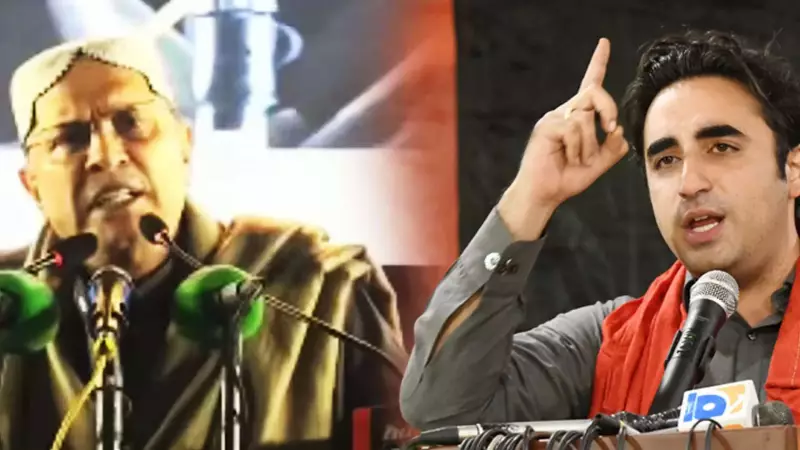
In a significant escalation of political rhetoric, Pakistan's opposition leader Bilawal Bhutto-Zardari launched a sharp verbal attack against India during an event commemorating his late mother, former Prime Minister Benazir Bhutto. The Pakistan Peoples Party (PPP) chairman made controversial claims about Indian leadership and the aftermath of a recent military confrontation.
Allegations of Fear and Silence
Addressing the gathering on December 30, 2025, Bilawal Bhutto directly targeted Prime Minister Narendra Modi. He asserted that the Indian leader, known for his strong speeches regarding Pakistan in the past, has fallen silent following what Pakistan refers to as Operation Sindoor in May. Bhutto's central claim was that Prime Minister Modi is now afraid of Pakistan's Army Chief, General Asim Munir.
He further contended that India has been unable to come to terms with what he described as Pakistan's "victory" in the May confrontation. This narrative frames the military operation as a decisive moment that altered the regional power dynamic, according to the Pakistani politician's perspective.

Zardari's Bellicose Reinforcement
The anti-India sentiment was not limited to Bilawal Bhutto. His father and former President, Asif Ali Zardari, who was also present, reinforced the confrontational stance with more incendiary remarks. Zardari shared an anecdote suggesting high military alert, claiming that the Pakistani military had advised him to seek safety in a bunker at one point.
He stated that he refused this advice, using the moment to proclaim that Pakistan was prepared for war. This statement, made at an event meant for solemn remembrance, sharply pivoted the focus to current geopolitical hostilities and military readiness.
Context and Regional Implications
The remarks come against a backdrop of persistently tense relations between the two nuclear-armed neighbors. The reference to Operation Sindoor—a name used by Pakistani officials for the May confrontation—indicates the event remains a potent symbol in Pakistan's domestic political discourse. Politicians often leverage national security and anti-India sentiment for political mobilization.
Analysts suggest such speeches serve dual purposes: to challenge the current Pakistani government's stance on India and to position the PPP as a staunch defender of national sovereignty ahead of potential elections. However, the escalation in rhetoric risks further complicating diplomatic channels and undermining regional stability.
The event, intended to honor Benazir Bhutto's legacy, ultimately became a platform for aggressive posturing, highlighting how India-Pakistan relations frequently dominate political narratives in Pakistan. The claims made by the Bhutto-Zardari duo reflect a continued strategy of blending military affairs with political rhetoric, a move watched closely by observers on both sides of the border.






