

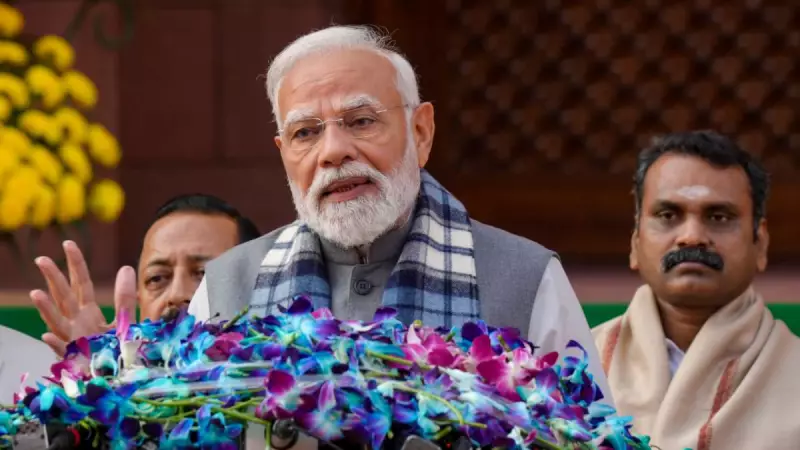
The Bangladesh Nationalist Party (BNP) has formally expressed its appreciation to Indian Prime Minister Narendra Modi for his message of concern regarding the health of former Bangladeshi Prime Minister Khaleda Zia. The party described the gesture as a significant one that reflects goodwill between the neighboring nations.
A Gesture Acknowledged Across the Border
This diplomatic communication occurred against the backdrop of serious health concerns for Khaleda Zia, a towering figure in Bangladeshi politics and the chairperson of the BNP. Prime Minister Modi's message was delivered on Monday, December 2, 2024. In response, the BNP issued an official statement to convey its thanks. The party's leadership explicitly stated that they "appreciate the gesture of goodwill" shown by the Indian Prime Minister. This exchange highlights the personal and political dimensions often intertwined in international relations, especially between countries with deep historical and cultural links.
Context of Khaleda Zia's Health and Political Landscape
Khaleda Zia, who served as the Prime Minister of Bangladesh from 1991 to 1996 and again from 2001 to 2006, has been facing prolonged health issues. Her medical condition has been a point of national concern and political discussion within Bangladesh. The BNP, as the primary opposition party, has consistently been involved in dialogues and sometimes confrontations with the current ruling government, the Awami League, led by Prime Minister Sheikh Hasina. In this complex political environment, a message of concern from the leader of India, a key regional power and neighbor, carries substantial symbolic weight. It is seen not just as a personal note but as an act with potential diplomatic resonance.

Implications for Bilateral Relations
The BNP's public acknowledgment of PM Modi's message is a notable development. It suggests a moment of diplomatic courtesy that transcends the usual political alignments. While India and Bangladesh under Sheikh Hasina's government have enjoyed robust ties, the BNP's relationship with New Delhi has historically been more nuanced. Therefore, this gesture and its warm reception could be interpreted as a subtle step towards broader political engagement. It underscores the importance of people-to-people connections and humanitarian concerns in foreign policy. The incident reinforces the idea that statecraft involves acknowledging shared humanity, especially during times of personal difficulty for prominent leaders.
Analysts observe that such gestures, while seemingly small, can contribute to a more stable and positive atmosphere for Bangladesh-India relations across the political spectrum. It demonstrates a maturity in diplomacy where expressions of empathy are valued irrespective of political differences. The BNP's statement effectively turns a personal health update into a diplomatic moment, appreciating the goodwill from India while also keeping the focus on the well-being of their leader. This event will likely be remembered as a cordial chapter in the ongoing narrative of the interconnected destinies of India and Bangladesh.






