

Bangladesh Nationalist Party Achieves Decisive Electoral Triumph
The political landscape of Bangladesh has undergone a dramatic transformation as the Bangladesh Nationalist Party (BNP) secured a landslide victory in the nation's first parliamentary elections since the deadly 2024 uprising. This historic event forced then-Prime Minister Sheikh Hasina from office, marking the end of her 15-year tenure and ushering in a new era of governance under the leadership of Tarique Rahman.
Tarique Rahman's Return and Leadership
The BNP is now led by 60-year-old Tarique Rahman, who serves as the party's prime ministerial candidate. Rahman returned to Bangladesh in December after spending 17 years in self-exile in London, bringing with him a vision for the country's future. He is the son of former Prime Minister Khaleda Zia, who passed away in December, adding a poignant personal dimension to this political resurgence.
The electoral contest was primarily a two-way race between the BNP and an 11-party alliance led by the Islamist Jamaat-e-Islami. This conservative religious party's growing political influence has raised significant concerns, particularly among women and minority communities who fear potential policy shifts under such alliances.

International Recognition and India's Response
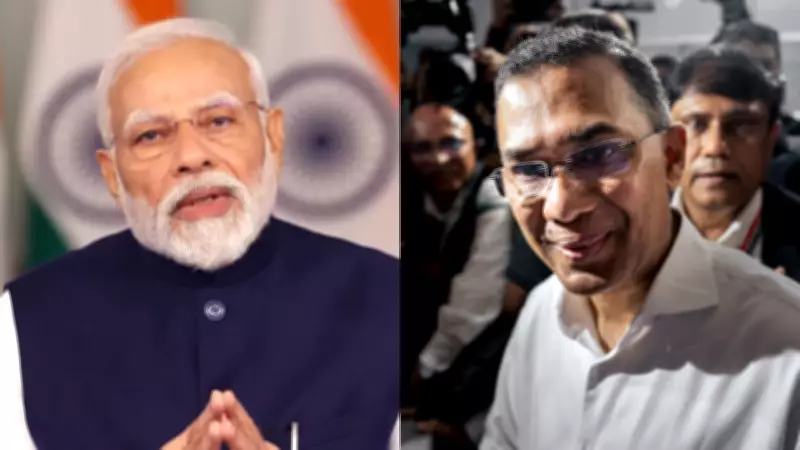
In immediate recognition of the political shift in Dhaka, New Delhi signaled its readiness to engage with the incoming government. Prime Minister Narendra Modi extended his congratulations on X (formerly Twitter), stating: "I convey my warm congratulations to Mr. Tarique Rahman on leading BNP to a decisive victory in the Parliamentary elections in Bangladesh. This victory shows the trust of the people of Bangladesh in your leadership. India will continue to stand in support of a democratic, progressive and inclusive Bangladesh. I look forward to working with you to strengthen our multifaceted relations and advance our common development goals."
The BNP responded by thanking India and Prime Minister Modi for recognizing the verdict of Bangladesh's general elections. The party expressed hope that bilateral relations would strengthen under the new government, setting a positive tone for future diplomatic engagements.
Geopolitical Implications for India-Bangladesh Relations
Historical Context and Current Challenges
One of the most pressing geopolitical challenges before the new administration will be recalibrating ties with India. Under Sheikh Hasina, New Delhi was Dhaka's closest strategic partner, with extensive cooperation on security and regional stability. However, relations deteriorated sharply following her ouster, with tensions becoming more visible in recent months.
The BNP's earlier terms in office (1991–96 and 2001–06) were marked by periodic friction with New Delhi. Diplomatic ties reached particularly low points during the 2001–06 period when the BNP governed in coalition with the right-wing Jamaat-e-Islami. Indian officials accused the BNP-led government of failing to curb anti-India insurgent groups operating from Bangladeshi territory, with concerns peaking in 2004 when a large cache of arms, allegedly meant for the United Liberation Front of Asom (ULFA), was seized in Chittagong.
Tarique Rahman's Pragmatic Approach
Despite this historical baggage, Tarique Rahman has recently adopted a pragmatic tone. The BNP's 2026 election manifesto introduced the doctrine of "Bangladesh Before All," under the slogan: "Friends, yes; Masters, no." In an interview with The Guardian, Rahman acknowledged that relations with India deteriorated after Hasina's removal but emphasized his desire for "a relationship of mutual respect and mutual understanding."
When asked whether full normalization was possible while India continues to provide refuge to Sheikh Hasina—whose extradition the BNP has formally sought—Rahman responded cautiously, saying, "That depends. It has to be on them too."

Critical Bilateral Issues
Hindu Minority Safety: The safety of minorities, particularly the Hindu community, remains a sensitive and closely watched issue in bilateral ties. In the months following Hasina's ouster in August last year, several incidents of violence targeting minorities were reported. India responded with a strongly worded statement, noting: "The unremitting hostilities against minorities in Bangladesh, including Hindus, Christians and Buddhists, at the hands of extremists are a matter of grave concern." The Ministry of External Affairs spokesperson added that over 2,900 incidents of violence against minorities had been documented by independent sources during the interim government's tenure.
Border Security and Infiltration: Securing the long and porous India-Bangladesh border remains one of the most sensitive issues between the two countries. Illegal cross-border migration continues to be politically charged in border states such as West Bengal and Assam. The BNP's manifesto promises to take a "strict position" to end alleged "border killings" by India's Border Security Force (BSF) and to halt what it describes as "push-ins" of individuals from the Indian side without due legal process.
Water-Sharing and River Diplomacy: Bangladesh shares 54 rivers with India, making river diplomacy central to bilateral engagement. The BNP manifesto places significant emphasis on securing what it calls a "fair share" of water from transboundary rivers such as the Teesta and the Padma. The party has signaled that it may pursue the China-backed Teesta River Master Plan—an initiative that New Delhi has opposed due to concerns over Chinese involvement near the strategically sensitive Siliguri Corridor. Additionally, the 1996 Ganges Water Treaty is due for renewal this year, adding another layer of complexity to water negotiations.
A New Chapter in South Asian Geopolitics
Ultimately, the BNP's decisive return to power represents a significant geopolitical shift in South Asia. For New Delhi, the phase of relying predominantly on one political leadership in Dhaka has ended, replaced by the need to engage a more assertive and politically distinct administration. The election results signal not just a change in government but a potential reconfiguration of regional alliances and priorities.
The coming months will test whether the BNP can navigate the complex web of domestic expectations and international relationships while maintaining stability in a nation still recovering from political upheaval. India's prompt recognition of the election results suggests a willingness to work with the new government, but historical tensions and contemporary challenges will require careful diplomacy from both sides.





