Broker for US Defense Chief Explored Defense ETF Investment Before Iran Strikes
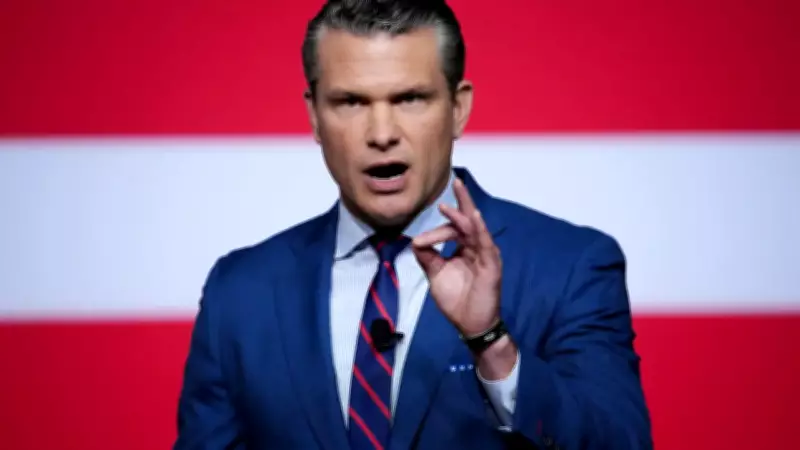
A financial broker working for US Secretary of War Pete Hegseth explored a significant investment in defense-linked assets shortly before the United States joined Israel in launching military strikes against Iran, according to a report published by the Financial Times on Monday.
Investment Inquiry in Defense-Focused ETF
The broker, who is affiliated with the global investment bank Morgan Stanley, reached out to asset management giant BlackRock in February about placing a multimillion-dollar sum into a defense-focused exchange-traded fund. This outreach occurred just weeks before the coordinated US-Israeli military action targeted Tehran.
The investment ultimately did not proceed to completion, as the specific fund in question had been introduced only last year and was not yet available for purchase through Morgan Stanley's investment platform at that time. The Financial Times report, which cites multiple people familiar with the matter, did not provide clarification on how much independent authority the broker possessed to initiate such moves or whether Secretary Hegseth himself was aware of the investment exploration.

Responses and Broader Scrutiny
When contacted for comment, BlackRock declined to provide any statement regarding the matter. Similarly, Morgan Stanley and the US Department of Defense did not immediately respond to requests for comment from the Financial Times.
This revelation emerges amid a broader context of increased scrutiny concerning trading activity within financial and prediction markets ahead of major policy announcements and decisions by US President Donald Trump. The timing of the broker's inquiry has raised questions, though no direct link to the subsequent military action has been established.
Trump's Comments on Hegseth's Advocacy
Last week, during a roundtable discussion with military and law enforcement officials, President Trump publicly suggested that Secretary Hegseth had been among the very first members of his administration to advocate for taking military action against Iran. Trump described the internal deliberations that preceded the decision to join Israeli strikes, portraying the Iranian government as a persistent and serious threat to regional and global security.
"We have a country known as Iran that for 47 years has been just a purveyor of terror… and they're very close to having a nuclear weapon," President Trump stated during the event.
He framed the strategic choice in stark and decisive terms, adding: "We can keep going… or we can take a stop and make a little journey into the Middle East and eliminate a big problem."
Trump then explicitly pointed to Hegseth's influential role in those critical discussions. "Pete, I think you were the first one to speak up… you said, 'Let's do it, because you can't let them have a nuclear weapon.'"
Administration's Evolving Explanations
These comments appear to place early momentum and advocacy for the military intervention squarely on the Pentagon chief, even as the Trump administration continues to offer varying explanations for its direct involvement in the strikes. Administration officials have alternately cited an imminent nuclear threat emanating from Iran as the primary justification, while also arguing that US participation became essentially unavoidable once Israel had determined its own course of action.
The convergence of financial market activity exploration and high-stakes military policy decisions underscores the complex interplay between global finance and international security dynamics.