Canadian PhD Scholar Detained in Pakistan Over Alleged Inflammatory Online Posts
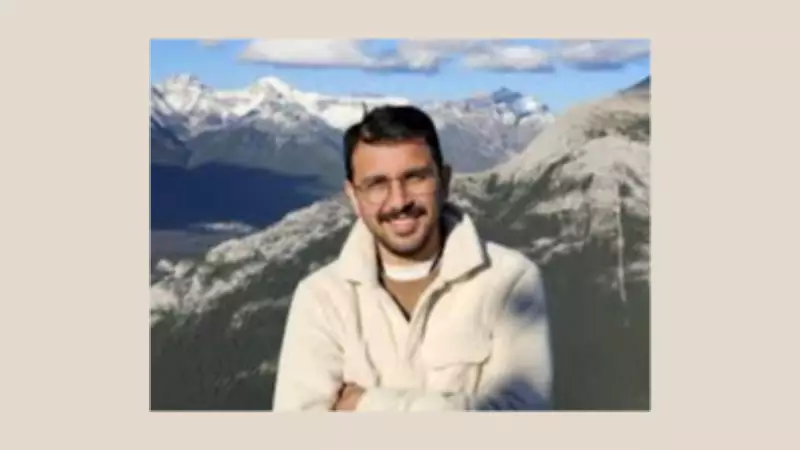
Hamza Ahmad Khan, a Pakistani-origin Canadian citizen and doctoral candidate at the University of Toronto, was reported missing on February 19 in Lahore, Pakistan. He had been staying with a friend since arriving in the country on February 13 for field research related to his thesis. The mysterious disappearance sparked concern in academic circles until it was revealed that Khan had been arrested by Pakistani authorities.
Arrest and Initial Court Proceedings
Following his disappearance, Pakistani media confirmed that Khan was arrested and appeared in court for an initial hearing, where he was remanded to a 14-day custody. The arrest was carried out by the federal National Cyber Crime Investigation Agency, which cited his online activity as the reason for detention. Authorities stated they were investigating inflammatory social media posts allegedly designed to incite public unrest, though specific posts were not detailed in the complaint.
Background and Research Purpose
Khan is a Canadian-Pakistani scholar pursuing a PhD from the University of Toronto, with his thesis focusing on the politics of democracy promotion in Muslim majority societies. Prior to his academic endeavors, he worked as a chartered accountant in both Pakistan and the United Kingdom. His trip to Pakistan was intended for field research to support his doctoral studies, highlighting the intersection of his academic work and the political scrutiny he now faces.

Social Media Activity and Political Criticism
According to reports, Khan maintained an X account where he posted numerous critiques of the Pakistani government. His recent posts included discussions on figures such as Imran Khan, references to Pakistan being part of Donald Trump's Board of Peace, and strong criticism of key Pakistani leaders. These targeted Prime Minister Shahbaz Sharif, Army Chief of Staff Asim Munir, and Bilawal Bhutto Zardari, the son of former Prime Minister Benazir Bhutto. The Toronto Star identified this account as likely belonging to Khan, though authorities have not pinpointed specific posts in their allegations.
Academic Community Reaction
The arrest has stirred reactions within academic circles. Ali Usman Qasi, an associate professor of humanities and social sciences at Lahore University of Management Sciences, expressed concern on X, noting that he met with Khan a day before the disappearance. Qasi wrote, I strongly disagree with many of Hamza's political views, but what I despise most is that he has been picked up for them. He emphasized the importance of dialogue, stating, We spoke candidly for an hour and left with a better understanding of where the other was coming from. This is why dialogue matters and why reaching across the political spectrum is essential.
Ongoing Legal and International Implications
As Khan remains in custody, the case raises questions about freedom of expression and the treatment of foreign scholars in Pakistan. The involvement of a Canadian citizen adds an international dimension, potentially affecting diplomatic relations between Canada and Pakistan. The situation underscores the challenges faced by researchers conducting fieldwork in politically sensitive environments, where online activism can lead to severe legal consequences.