

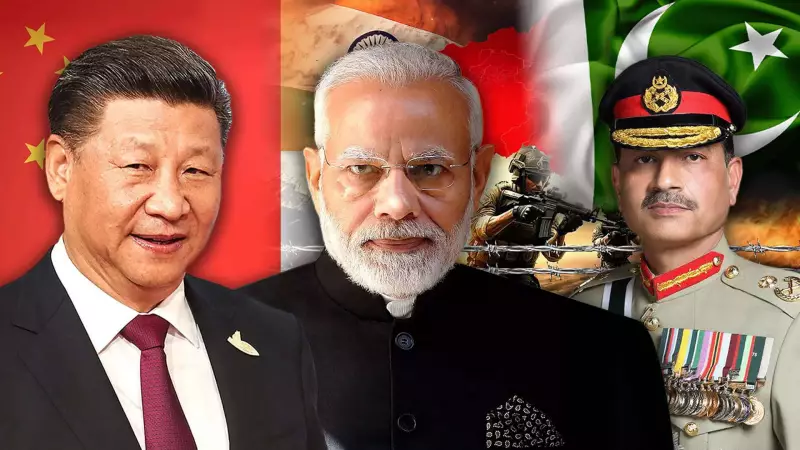
In a significant diplomatic development, China has publicly claimed credit for helping to mediate peace between India and Pakistan during their recent military tensions. This assertion comes on the heels of similar claims made by former US President Donald Trump, creating a complex geopolitical narrative around the longstanding conflict.
Beijing's Claim to Diplomatic Prowess
The claim was made by Chinese Foreign Minister Wang Yi during a symposium on international affairs held in Beijing. In his address on December 31, 2025, Wang Yi positioned China as a key global peace negotiator. He highlighted Beijing's diplomatic engagements not only concerning South Asia but also in other global hotspots. These included tensions in northern Myanmar, border disputes between Cambodia and Thailand, and the ongoing Iranian nuclear issue.
By cataloging these efforts, China is strategically projecting itself as a diplomatic player on par with other world powers. The move is seen as an attempt to solidify its image as a responsible global leader capable of managing and resolving international conflicts.

India's Firm and Unwavering Stance
India's response to these claims has been swift and unambiguous. The Indian government has consistently and categorically rejected any notion of third-party mediation in its matters with Pakistan. New Delhi maintains that the India-Pakistan relationship is strictly bilateral. The official position is that all outstanding issues, including the core dispute over Kashmir, must be resolved through direct dialogue between the two nations, without any external intervention.
This rejection applies equally to claims from both the United States and China. India's foreign policy doctrine on this issue remains a cornerstone of its strategic autonomy, emphasizing sovereignty and direct engagement.
Context and Implications
The timing of China's statement is particularly notable. It follows a pattern where global powers attempt to assert influence in South Asia, a region of intense strategic competition. The claims of mediation, whether from Washington or Beijing, are often viewed in New Delhi as attempts to gain leverage or diplomatic brownie points rather than genuine conflict resolution efforts.
This incident underscores a broader geopolitical tussle. While China seeks to expand its diplomatic influence by portraying itself as an indispensable peacemaker, India is determined to guard its strategic space and resist any external pressure to internationalize what it considers a purely bilateral dispute. The firm Indian rebuttal serves as a clear message about the limits of such diplomatic posturing.
The episode reaffirms the deep-seated complexities of South Asian geopolitics. It highlights the clash between India's insistence on bilateralism and the desire of other major powers to play a role in shaping the region's security architecture. For now, the ball remains in the court of India and Pakistan, with the world watching but, officially at least, not invited to mediate.






