

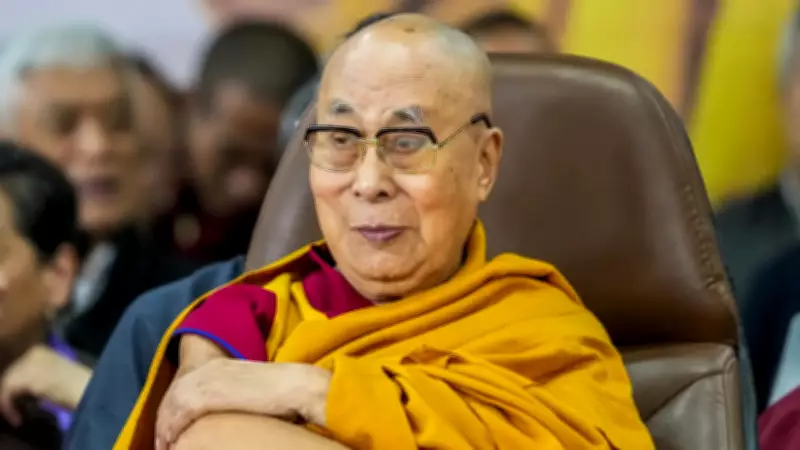
China has issued a sharp criticism of the Grammy Award presented to the Dalai Lama, expressing firm opposition to what it describes as the Tibetan spiritual leader's use of international recognition to advance anti-China separatist activities. The strong reaction came on Monday following the announcement that the Dalai Lama, also known as Tenzin Gyatso, had secured his first Grammy Award at the prestigious 68th Grammy Awards ceremony held in Los Angeles.
China's Official Response to the Grammy Honor
During a regular media briefing, Chinese foreign ministry spokesperson Lin Jian addressed questions about the award and reiterated Beijing's longstanding position regarding the Tibetan leader. Lin emphasized that China views the Dalai Lama not as a purely religious figure but as a political exile dedicated to separatist activities under the cover of religion.
"The Dalai Lama is not purely a religious person," Lin stated unequivocally. "He is a political exile committed to anti-Chinese separatist activity under the disguise of religion." The spokesperson further added that Beijing "firmly opposes relevant sides using the award as a tool to carry out anti-China activities."

Details of the Grammy Award Achievement
The 90-year-old spiritual leader received the Grammy Award in the category of Best Audio Book, Narration, and Storytelling Recording for his spoken-word album titled "Meditations: The Reflections of His Holiness the Dalai Lama." This recognition marked his first Grammy win, placing him ahead of several notable nominees including:
- Kathy Garver for "Elvis, Rocky & Me: The Carol Connors Story"
- Trevor Noah for "Into the Uncut Grass"
- Ketanji Brown Jackson for "Lovely One: A Memoir"
- Fab Morvan for "You Know It's True: The Real Story of Milli Vanilli"
Historical Context and International Recognition
The Dalai Lama has resided in exile in Dharamsala, India, since 1959 when he fled Tibet following an unsuccessful uprising against Chinese rule. His international profile includes the Nobel Peace Prize awarded in 1989, which the Nobel Committee granted for his consistent, non-violent struggle for Tibetan freedom.
China maintains a firm position that the Dalai Lama represents separatist interests and has consistently objected to engagements between foreign entities and the Tibetan leader. Meanwhile, the Dalai Lama has repeatedly stated that he seeks genuine autonomy for Tibet rather than complete independence from China.
The Dalai Lama's Reaction to the Grammy Award
In response to receiving the Grammy honor, the Tibetan spiritual leader adopted a reflective and modest tone, emphasizing that he did not view the award as a personal achievement. Instead, he highlighted the broader messages he hopes to promote through such recognition.
"I firmly believe that peace, compassion, care for our environment, and an understanding of the oneness of humanity are essential for the collective well-being of all eight billion human beings," the Dalai Lama remarked. "I am grateful that this Grammy recognition can help spread these messages more widely."
The contrasting perspectives between China's official stance and the Dalai Lama's stated intentions continue to highlight the complex geopolitical dimensions surrounding Tibet and its spiritual leader's international engagements.






