

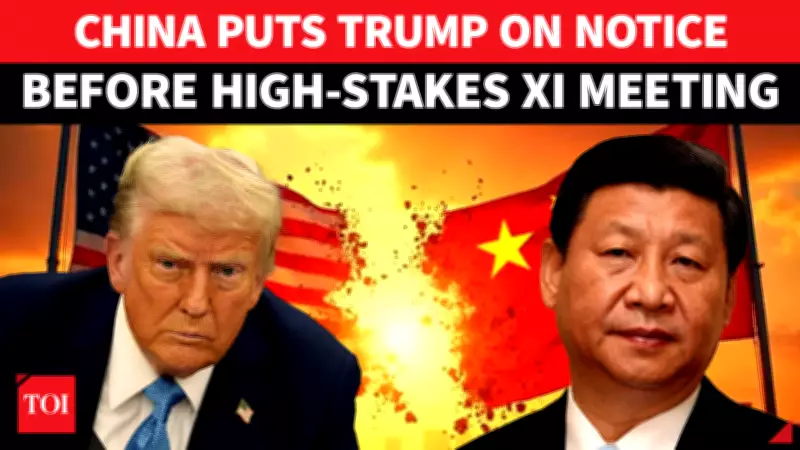
Just hours before Donald Trump arrived in China for a high-stakes summit with President Xi Jinping, Beijing issued a dramatic warning to Washington by unveiling four major red lines the United States must not cross. The Chinese Embassy in the U.S. identified Taiwan, democracy and human rights, political systems, and China's development rights as core issues tied directly to Beijing's sovereignty and national security.
Red Lines Defined
The four red lines are non-negotiable, according to Beijing. The first relates to Taiwan, which China considers a breakaway province and warns against any official U.S. interaction with Taipei. The second concerns democracy and human rights, where China rejects foreign criticism of its domestic policies. The third red line addresses political systems, emphasizing that China's socialist system must not be challenged. The fourth focuses on China's development rights, including its technological and economic progress.
Context of Rising Tensions
The warning comes as tensions rise over the Iran war, trade disputes, sanctions, Taiwan, and growing military rivalry between the world's two biggest powers. Trump said he plans to discuss Iran, oil, and trade with Xi during the visit, while Beijing accused Washington of targeting Chinese companies over alleged ties to Tehran.

China's statement underscores the fragile state of U.S.-China relations, which have deteriorated amid trade wars, technology bans, and military posturing. The summit is seen as a critical opportunity to de-escalate, but Beijing's red lines signal limited room for compromise.
Reactions and Implications
Analysts suggest that China's red lines are a strategic move to set the agenda and prevent the U.S. from pressing issues like human rights or Taiwan. The timing, just before Trump's arrival, is intended to maximize leverage. The two leaders are expected to address the Iran conflict, where China has maintained economic ties with Tehran despite U.S. sanctions.
Observers warn that any misstep could trigger a broader confrontation, especially over Taiwan, where China has increased military activities. The summit's outcome will likely shape global geopolitics for years to come.






