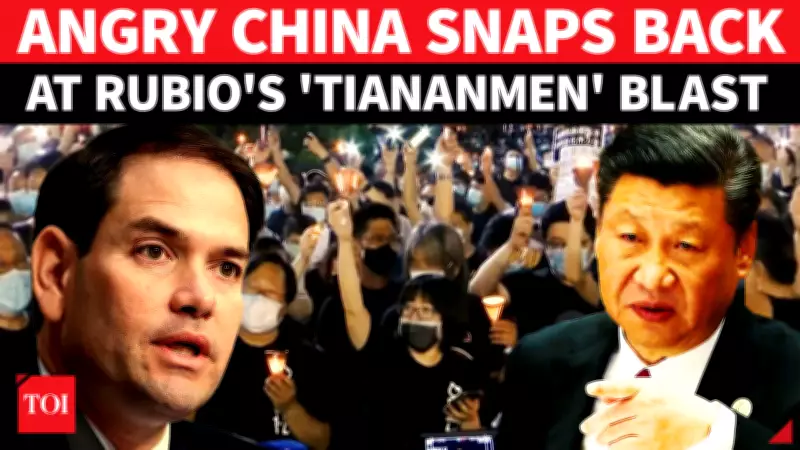
A fresh diplomatic clash has erupted between Beijing and Washington after U.S. Secretary of State Marco Rubio marked the anniversary of the 1989 Tiananmen Square crackdown. Rubio stated that censorship could not erase the memory of the pro-democracy protests, prompting a sharp response from China. Beijing accused the United States of distorting history, smearing China's political system, and interfering in its internal affairs.
Rubio's Remarks Spark Outrage in Beijing
On the anniversary of the Tiananmen Square events, Rubio issued a statement asserting that the Chinese government's attempts to suppress the narrative of the protests have failed. He emphasized that the memory of the demonstrators remains alive despite decades of censorship. In response, China's Foreign Ministry spokesperson strongly condemned Rubio's comments, calling them a blatant interference in China's domestic affairs. The spokesperson urged the U.S. to respect China's sovereignty and to stop spreading misinformation.
China's Accusation of Historical Distortion
Beijing's response was swift and unequivocal. The Chinese government accused Rubio of deliberately distorting historical facts to tarnish China's image. A statement from the Chinese embassy in Washington declared that Rubio's remarks are based on false narratives and are intended to undermine the stability of China. China reiterated that the events of 1989 were necessary to maintain social order and national security, and any external criticism is unwarranted.

Escalating Tensions Between Two Superpowers
The exchange marks another low point in U.S.-China relations, which have been strained over issues ranging from trade to human rights. Analysts suggest that Rubio's comments are part of a broader U.S. strategy to challenge China's authoritarian governance. However, such confrontations risk further destabilizing the bilateral relationship, which is crucial for global economic and political stability. Both nations have shown little willingness to compromise on their respective positions, raising concerns about future diplomatic engagements.
In conclusion, the diplomatic spat underscores the deep ideological divide between the two countries. While the U.S. continues to advocate for democratic values and human rights, China remains firm in its stance against external interference. The incident is likely to fuel further tensions, with both sides unwilling to back down.