

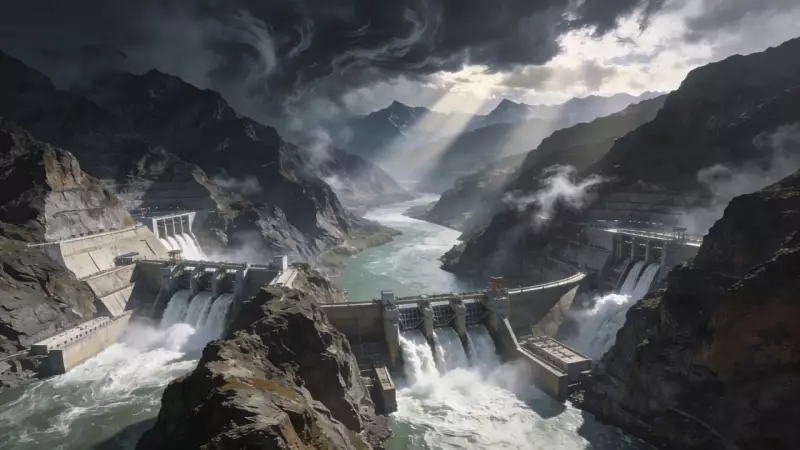
China is advancing a colossal hydropower initiative on the Yarlung Tsangpo river in Tibet, a development that Indian officials and experts caution poses a severe threat to water security, ecological balance, and livelihoods downstream in India. As the river flows into India as the Brahmaputra, any major upstream intervention is viewed as a direct peril to millions reliant on its natural course.
The 'Water Bomb' and Strategic Concerns
The proposed $168 billion hydropower system aims to exploit a dramatic 2,000-metre drop in altitude using a complex network of dams, reservoirs, tunnels, and underground power stations. For India, the apprehension extends beyond environmental impact to existential concerns. Arunachal Pradesh Chief Minister Pema Khandu has explicitly warned that the project could function as a potential "water bomb," granting China control over the timing and volume of water released into the Brahmaputra.
This control could lead to catastrophic scenarios: sudden discharges might trigger devastating floods, while withholding water could desiccate vast stretches of the river during crucial periods for agriculture and ecosystems. Although a significant portion of the Brahmaputra's flow originates from monsoon rains and Indian tributaries, hydrology experts stress that upstream manipulation can still severely disrupt the river's natural rhythm and sediment flow.

Environmental and Geopolitical Fallout
Even limited alterations to the river's flow could adversely affect the fertile floodplains, fisheries, and groundwater recharge processes in Assam and Arunachal Pradesh, regions already grappling with climate-induced stresses. China has dismissed these downstream worries, with its foreign ministry asserting that neighbouring countries will not face adverse effects. However, scepticism in India remains profound, heavily influenced by China's historical management of other transboundary rivers like the Mekong.
Brian Eyler, Director of the Energy, Water and Sustainability Program at the Stimson Center in Washington, has highlighted the project's unprecedented technical scale, describing it as the most sophisticated hydropower system ever conceived, but also one of the riskiest. The location in a seismically active and ecologically fragile zone amplifies fears, where any engineering failure or miscalculation could trigger cascading disasters downstream.
Rising Tensions and a Potential Dam Race
The developments upstream have prompted a reactive move from India. India's largest state-run hydropower company is now pushing forward with its own 11,200-megawatt project on the Brahmaputra, a strategy driven by fears of ceding strategic and water security ground. Analysts warn that this could set the stage for a dangerous dam-building competition between the two Asian giants.
Without essential cooperation, data sharing, and transparency, such competing mega-projects on a shared river system could exponentially increase risks for both nations. Experts caution that this lack of collaborative governance could undermine regional stability and jeopardise the future of the Brahmaputra basin, placing the lives and livelihoods of millions in peril.






