

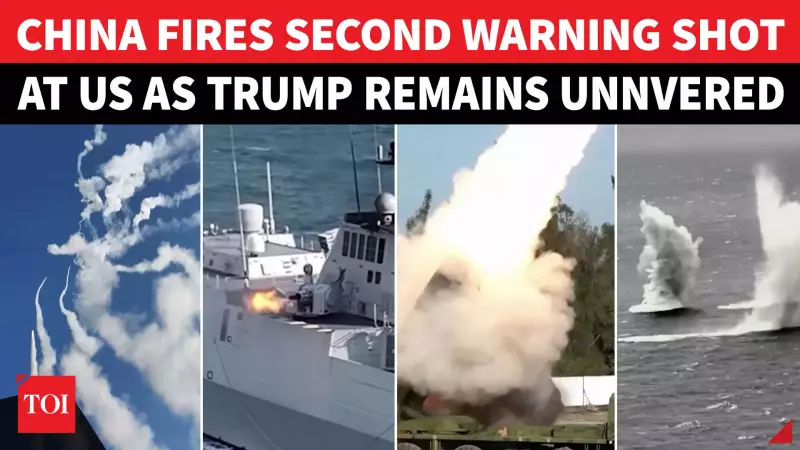
In a significant escalation of military posturing, China's People's Liberation Army (PLA) conducted large-scale, live-fire war games around Taiwan for a second consecutive day. The drills, which included coordinated sea and air operations, come amidst heightened tensions following a major US arms sale to the self-ruled island.
Trump's Dismissive Response to Chinese Show of Force
Despite the visible military buildup, US President Donald Trump publicly downplayed the developments. When questioned about the exercises, Trump stated he was not 'worried' by the Chinese actions. This remark stands in stark contrast to the on-ground reality, where the PLA's Eastern Theater Command deployed a formidable array of naval and aerial assets. The military showcased its capabilities with destroyers, frigates, fighter jets, and bombers operating in waters both north and south of Taiwan.
The primary objective of these drills, as stated by Chinese authorities, was to test the military's proficiency in sea-air coordination and executing a potential blockade. The timing of these exercises is particularly pointed, occurring just days after a provocative move from Washington.

The Spark: A Massive US Arms Package to Taiwan
The trigger for this latest round of Chinese military activity was a significant announcement from the United States. The Washington administration confirmed a substantial arms sale package to Taiwan valued at over $10 billion. This package is reported to include advanced weaponry such as medium-range missiles, howitzers, and drones, significantly boosting the island's defensive capabilities.
China, which views Taiwan as a breakaway province that must eventually be reunited with the mainland, consistently opposes any foreign military support for the island. The US sale is seen in Beijing as a direct challenge to its sovereignty claims and a violation of long-standing diplomatic understandings.
Regional Stability Hangs in the Balance
The situation presents a complex geopolitical puzzle. On one side, President Trump's dismissive rhetoric suggests a calculated effort to avoid escalating verbal tensions. On the other, the tangible military movements by the PLA in the strategically vital Taiwan Strait represent a clear and present demonstration of force. The region is now watching closely to see if these drills de-escalate or if they are a precursor to more sustained military pressure from Beijing.
The interplay between US foreign policy, Taiwan's security, and China's territorial ambitions continues to be one of the world's most volatile flashpoints. The latest chapter, featuring roaring rocket fire and a seemingly unconcerned American president, underscores the fragile nature of peace in the Indo-Pacific region. The international community remains alert, hoping diplomatic channels can prevent a miscalculation that could have global repercussions.






