

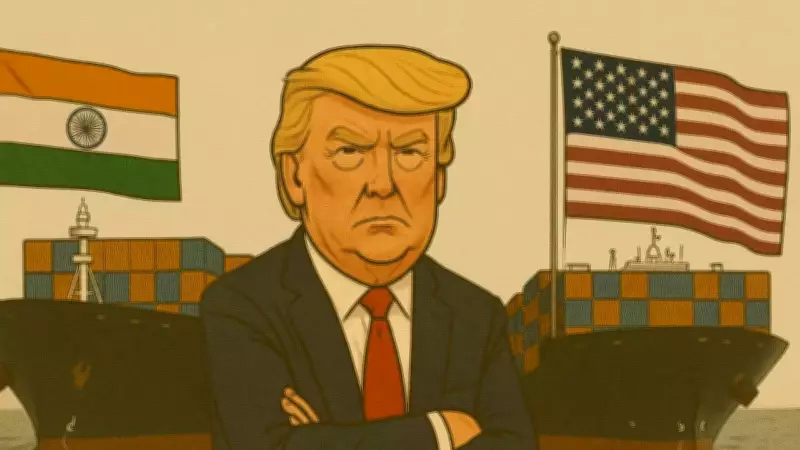
US Supreme Court Deems Trump's Reciprocal Tariffs Illegal in Landmark Ruling
The United States Supreme Court delivered a significant blow to former President Donald Trump's trade policies on Friday, declaring his reciprocal tariffs as illegal. This ruling carries profound implications for global trade dynamics, particularly for India, as it invalidates country-specific tariffs that have been a cornerstone of Trump's aggressive trade war strategy.
Immediate Impact on India's Export Landscape
According to analysis from the Global Trade Research Initiative (GTRI), this judicial decision will directly benefit approximately 55% of India's exports to the United States. These exports will no longer face the 18% reciprocal tariffs that Trump had imposed, reverting instead to standard Most Favored Nation (MFN) tariff rates.
"Removal of reciprocal tariffs will free about 55% of India's exports to the US from the 18% duty, leaving them subject only to standard MFN tariffs," states the GTRI analysis. This development comes shortly after Trump had reduced tariffs on India from 50% to 18%, signaling a potential thaw in trade tensions between the two nations.

What Remains Subject to US Tariffs
While the ruling provides substantial relief, certain Indian exports will continue to face American tariffs:
- Section 232 tariffs persist on steel and aluminum (50%) and certain auto components (25%)
- Products accounting for roughly 40% of export value, including smartphones, petroleum products, and medicines, remain exempt from US tariffs regardless of the ruling
GTRI founder Ajay Srivastava emphasizes that this ruling should prompt India to re-examine its trade deal negotiations with the United States. "The decision effectively renders recent trade deals initiated or concluded by the United States with the UK, Japan, the EU, Malaysia, Indonesia, Vietnam and India one-sided and useless. Partner countries may now find reasons to dump these deals," Srivastava notes.
Legal Basis and Constitutional Implications
The Supreme Court's ruling centers on constitutional separation of powers, determining that President Trump overstepped his authority by levying tariffs under the International Emergency Economic Powers Act (IEEPA). This 1977 statute was designed to address genuine national emergencies, not to facilitate broad trade policy initiatives.
Chief Justice John Roberts, writing for the majority, stated unequivocally that IEEPA does not grant the president the power to impose tariffs unilaterally. The administration failed to identify any existing law that authorized such sweeping tariff actions, according to the court's assessment.
This decision reinforces Congress's central role in shaping trade policy, significantly limiting presidential discretion to use tariffs as strategic tools. The ruling redefines how future administrations may rely on emergency economic powers, establishing important precedents for executive authority in trade matters.
Broader Consequences for US Trade Policy
The judgment strikes down not only country-specific "reciprocal" tariffs but also fentanyl-related duties applied to imports from key trading partners. While Trump or future presidents could theoretically seek to reinstate tariffs under Section 301 or Section 232 provisions, these pathways require fresh investigations and formal justifications.
Such processes would significantly slow implementation and likely trigger additional legal disputes. Moreover, these statutes cannot be deployed as blanket enforcement mechanisms, limiting their utility for broad-based tariff initiatives.
Timing and Diplomatic Context
This ruling arrives at a crucial diplomatic moment between India and the United States. An India-US joint statement was issued earlier this month addressing trade relations, and an Indian delegation is scheduled to travel to the United States in coming days to finalize an interim trade deal.
The Supreme Court's decision fundamentally alters the negotiating landscape, potentially giving India stronger leverage in these discussions. With reciprocal tariffs now invalidated, both nations must reassess their positions and recalibrate their trade strategies accordingly.

This landmark ruling represents more than just a legal technicality—it reshapes the balance of power in international trade policy and establishes important boundaries for executive authority in economic matters affecting global commerce.





