

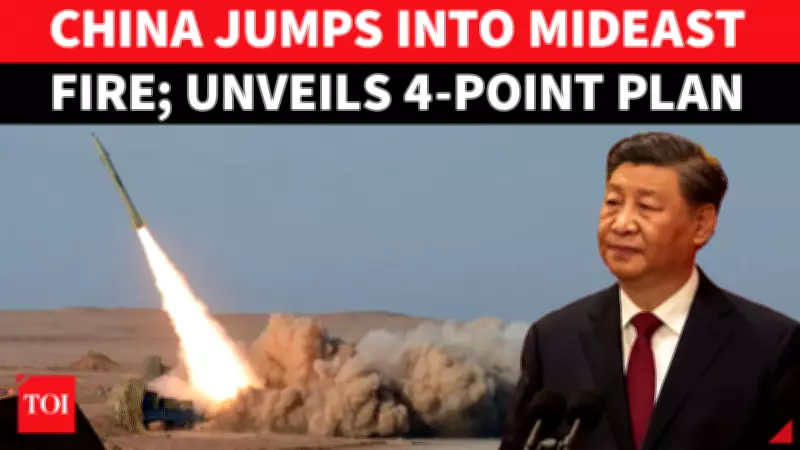
China's Diplomatic Gambit: Xi Jinping Proposes Four-Point Middle East Peace Framework
In a significant geopolitical development, Chinese President Xi Jinping has formally introduced a four-point peace proposal aimed at stabilizing the volatile Middle East region. This diplomatic initiative comes at a critical juncture, coinciding with the collapse of US-Iran negotiations held in Islamabad, Pakistan, which concluded without any tangible breakthrough.
Timing and Context: A Strategic Diplomatic Move
The unveiling of China's peace plan occurred during President Xi's high-level meeting with the Crown Prince of the United Arab Emirates, underscoring Beijing's deliberate and calculated approach to regional diplomacy. This move is widely interpreted as a clear signal of China's intention to assume a more central and influential role in shaping Middle Eastern outcomes, particularly in areas where traditional US-led diplomatic efforts have encountered persistent difficulties and setbacks.
The Core Principles of China's Four-Point Proposal
The comprehensive peace framework articulated by President Xi Jinping is built upon several foundational pillars designed to address the region's complex challenges:

- Peaceful Coexistence Among Regional States: The plan advocates for mutual respect and non-interference, encouraging Middle Eastern nations to resolve differences through dialogue and diplomatic channels rather than confrontation.
- Respect for National Sovereignty: A key component emphasizes the inviolability of state sovereignty, opposing external interventions and supporting the right of nations to determine their own political and developmental paths.
- Adherence to International Law: The proposal calls for all regional actors to comply with established international legal norms and frameworks, promoting a rules-based order for conflict resolution and interstate relations.
- Balanced Security and Economic Development: Recognizing the interconnection between stability and prosperity, the plan advocates for a holistic approach that links security assurances with sustainable economic growth and development initiatives.
Geopolitical Implications and Regional Reactions
This diplomatic offensive by China represents a potential strategic shift in the Middle East's power dynamics. By presenting a coherent alternative peace framework immediately following the failure of US-mediated talks, Beijing is positioning itself as a viable diplomatic actor capable of filling voids left by American policy struggles. The proposal arrives amidst heightened regional tensions, including recent military escalations and provocative statements from various state and non-state actors.
Analysts suggest that China's enhanced diplomatic engagement reflects its broader ambitions to expand its global influence and reshape international governance structures. The Middle East, with its strategic importance and ongoing conflicts, presents both a challenge and an opportunity for Beijing to demonstrate its capacity as a major power broker on the world stage.
The international community is closely monitoring how regional powers will respond to this Chinese initiative, particularly whether it will gain traction among Middle Eastern nations seeking alternatives to traditional Western-led diplomatic processes. The success or failure of this proposal could have significant implications for future conflict resolution efforts and the balance of influence in one of the world's most strategically vital regions.






