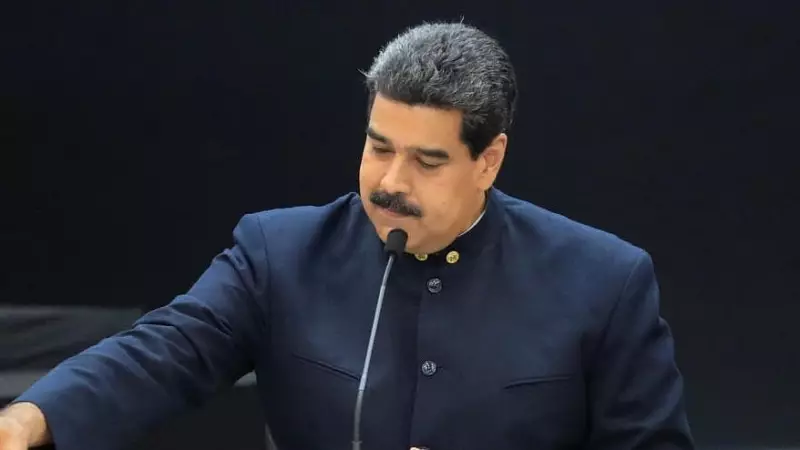
In a significant development concerning the future of Venezuela, a confidential assessment by the United States Central Intelligence Agency (CIA) has identified senior loyalists of the current regime as the figures best suited to ensure a stable transition of power should President Nicolas Maduro fall from office.
Classified Findings Presented to Trump
The classified CIA assessment was reportedly briefed to the then US President, Donald Trump. The core conclusion, as revealed, is that figures deeply embedded within the existing power structure possess the necessary control and influence to prevent a complete collapse of order. The analysis suggests that a sudden vacuum, filled by opposition figures without deep institutional ties, could lead to greater instability.
Among those named as pivotal to this stability calculus is Vice President Delcy Rodriguez, a powerful and long-standing figure in the Maduro government. The CIA's view implies that continuity, even from within the current political circle, might be preferable to a chaotic and unpredictable power shift that could exacerbate the nation's severe economic and humanitarian crisis.
Implications for US Policy and Regional Dynamics
This assessment, dated 06 January 2026, presents a complex dilemma for international actors, particularly the United States. For years, US policy has actively sought a democratic transition in Venezuela, often supporting opposition leaders and imposing sanctions on the Maduro regime. The CIA's conclusion, however, introduces a pragmatic, if controversial, strategic consideration: that the path to maintaining stability may run through the very individuals the US has previously targeted.
The report's findings could signal a potential recalibration of approach, focusing on managed transition scenarios rather than a wholesale overthrow. It underscores the challenging reality that removing a leader is one thing, but ensuring what follows is not worse is another. The primary goal, as per the assessment, is to avoid a scenario where the country descends into further chaos, which would have dire consequences for the Venezuelan people and regional security.
Looking Ahead: A Path Fraught with Challenges
The revelation of this CIA analysis does not guarantee a policy shift, but it highlights the intricate intelligence shaping high-level discussions. It acknowledges the entrenched power of Maduro loyalists within Venezuela's military, political, and bureaucratic institutions. Any future political solution or negotiation for the oil-rich nation may now have to account for the central role these figures are predicted to play in a post-Maduro landscape, whether the international community approves of them or not.
The road ahead for Venezuela remains uncertain. While the desire for democratic change is strong, this intelligence assessment places a stark emphasis on the practicalities of power and the grim necessity of maintaining stability above all else in a fractured nation. The world will be watching to see how these conclusions influence future diplomatic efforts.