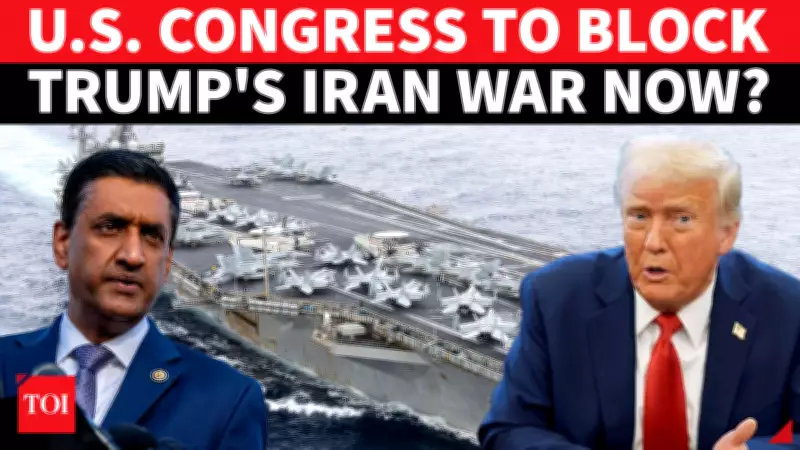
Democrats Move to Force House Vote to Block Trump's Potential Iran Military Action
In a dramatic political showdown in Washington, Democratic Congressman Ro Khanna is spearheading an effort to compel a House vote aimed at preventing President Donald Trump from initiating military strikes against Iran without explicit congressional approval. This move underscores a critical constitutional clash over war powers as tensions with Iran reach a boiling point.
War Powers Resolution Gains Momentum with Bipartisan Support
The resolution in question, the War Powers Resolution, was first introduced in June 2025 during the 12-day U.S.-Israeli conflict with Iran. Notably, it garnered initial support from Republican Thomas Massie, highlighting rare bipartisan concern. Currently, the resolution boasts 77 Democratic co-sponsors, signaling strong opposition within the party to unilateral executive action.
Khanna has been vocal in his arguments, emphasizing that the U.S. Constitution explicitly grants Congress the authority to declare war. He warns that without this legislative check, Trump could authorize strikes on Iran within days or weeks, potentially escalating into a full-scale conflict. The urgency is compounded by the presence of tens of thousands of U.S. troops stationed within range of Iranian missiles, making this a pivotal decision with far-reaching implications for national security.

Escalating Tensions and Global Implications
The push for this vote comes amid heightened global tensions. Recent developments, such as Iran issuing a NOTAM ahead of a missile launch and continued U.S. military buildup, have fueled fears of an imminent confrontation. Additionally, international actors like Russia have weighed in, with statements blaming Europe and the U.S. for nuclear deadlocks and declaring support for allies, further complicating the geopolitical landscape.
Lawmakers are now faced with a historic choice that could shape America's next major military engagement. The outcome of this forced vote will not only test the balance of power between the executive and legislative branches but also determine the trajectory of U.S. foreign policy in the volatile Middle East region.
Broader Context and Related Developments
This political maneuver is part of a larger narrative of conflict and diplomacy. For instance, Trump has issued warnings to other world leaders, such as advising against deals involving the Chagos Islands ahead of potential Iran strikes. Meanwhile, domestic issues, including emergencies declared due to wildfires in Oklahoma and controversies involving figures like Zuckerberg and Epstein, continue to unfold, though they remain separate from the Iran crisis.
As the House prepares for this critical vote, all eyes are on Washington to see if Congress will assert its constitutional role or allow the president to proceed with military action that could have devastating consequences for regional stability and international relations.