

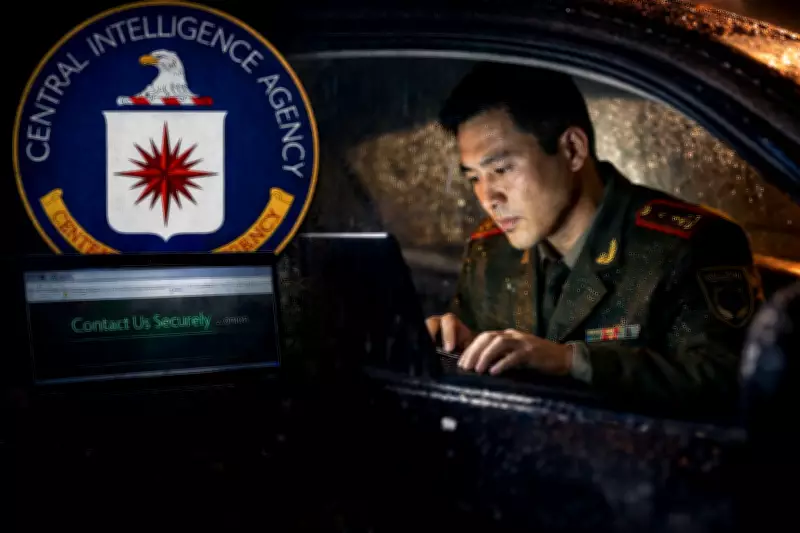
CIA Intensifies Espionage Campaign with Targeted Chinese Military Recruitment Video
The Central Intelligence Agency has escalated its intelligence-gathering operations by releasing a provocative new video specifically designed to recruit spies within China's military establishment. This Mandarin-language production represents a significant expansion of the agency's ongoing campaign to attract informants from within the People's Liberation Army, a move that will almost certainly provoke strong reactions from Beijing's leadership.
Fictional Narrative of Disillusioned PLA Officer
The carefully crafted video, published on the CIA's official YouTube channel, presents a fictional narrative centered around a mid-level officer serving in the People's Liberation Army. This character is portrayed as increasingly disillusioned by what the video suggests is widespread corruption among China's senior military leadership. The production shows the officer performing his daily duties before transitioning to scenes of domestic life with his family, ultimately depicting his decision to establish contact with American intelligence services.
In one particularly striking segment, the fictional officer delivers a powerful monologue: "Each day that passes makes it increasingly evident that our party leaders are primarily interested in protecting their own financial interests rather than national security. They constructed their careers upon foundations of deception, but those false structures are gradually deteriorating, leaving ordinary personnel to manage the resulting chaos."

Another emotional scene shows the character reflecting on his family circumstances, stating: "I could not permit their unethical behavior to negatively influence my daughter's future prospects."
Direct Appeal for Intelligence Cooperation
The video incorporates prominent Chinese text that directly solicits cooperation from potential informants, posing several targeted questions:
- Do you possess information regarding high-ranking Chinese officials?
- Are you currently serving as a military officer or have regular dealings with military personnel?
- Do you work in intelligence, diplomatic, economic, scientific, or advanced technology sectors, or interact with professionals in these fields?
The appeal concludes with an invitation: "Please establish contact with our organization. We seek to understand the complete truth," while providing instructions for secure communication through Tor hidden services on the dark web.
Strategic Intelligence Initiative
This latest recruitment effort follows similar video campaigns launched last year targeting Chinese citizens. CIA Director John Ratcliffe has characterized these productions as integral components of broader operational adaptations within the intelligence community. "These videos represent just one aspect of our comprehensive adjustments to intelligence tradecraft methodologies," Ratcliffe explained in official remarks.
In a separate statement addressing the initiative's strategic objectives, Ratcliffe elaborated: "Our previous Mandarin video campaign successfully reached numerous Chinese citizens during the past year. We recognize that many individuals are actively seeking pathways to improve their personal circumstances and contribute to positive national transformation. We remain committed to providing Chinese government officials and ordinary citizens with opportunities to collaborate toward creating more promising futures."
Generational Intelligence Challenge
An anonymous CIA official, speaking under standard confidentiality conditions, identified China as presenting a generational intelligence challenge for the United States, describing the nation as one of the agency's highest-priority intelligence targets. Despite China's comprehensive ban on YouTube and numerous Western digital platforms, the official confirmed that these recruitment materials are successfully reaching intended audiences through various circumvention methods.
The intelligence agency has published detailed technical instructions explaining how Chinese nationals can utilize virtual private networks and dark web protocols to establish secure, undetectable communications with American intelligence services.

Strategic Timing Amid Military Reforms
This intensified recruitment campaign coincides with President Xi Jinping's sweeping anti-corruption initiatives within China's military hierarchy. Recent months have witnessed the removal of the nation's highest-ranking military officer along with another senior general, with Chinese authorities citing unspecified but "grave violations of disciplinary standards and legal requirements."
American intelligence analysts believe allegations of systemic corruption within the People's Liberation Army have created potential vulnerabilities that could be exploited to recruit dissatisfied officers. U.S. officials note that China's rapidly expanding military and intelligence budgets, combined with extensive contracting across multiple industrial sectors, have generated increased opportunities for financial misconduct and graft.
Historical Context and Chinese Responses
Beijing has previously condemned similar CIA recruitment efforts as "blatant political provocations," accusing Washington of deliberately disseminating malicious misinformation about China while openly encouraging Chinese personnel to defect. These new recruitment materials are likely to generate similarly strong diplomatic protests from Chinese authorities, further complicating already strained bilateral relations between the world's two largest economies.
The CIA's latest video represents a sophisticated psychological operation that combines emotional storytelling with practical communication instructions, reflecting the evolving nature of modern intelligence recruitment in an increasingly digital global landscape where technological barriers and geopolitical tensions continue to shape espionage methodologies.





