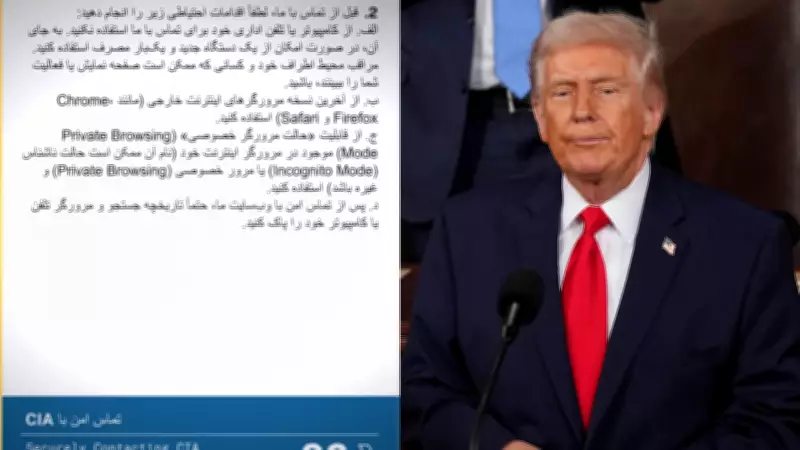
CIA Publishes Farsi-Language Social Media Instructions for Iranians
The United States Central Intelligence Agency (CIA) has launched a new initiative by issuing detailed Farsi-language instructions on social media platforms, specifically targeting Iranians who may wish to establish secure and confidential contact with the agency. This message was disseminated on Tuesday across the CIA's official accounts on X, Instagram, Facebook, Telegram, and YouTube, marking a strategic move to enhance communication channels in the region.
Recruitment Efforts and Safety Precautions
This outreach is a component of a broader campaign by the CIA to recruit sources and gather intelligence from countries such as Iran, China, North Korea, and Russia. In the social media post, the agency emphasized the importance of taking appropriate precautions to protect personal safety. It advised prospective contacts to avoid using work computers or personal mobile phones when attempting to communicate, as these devices could be compromised.
The CIA recommended, "Use a new, disposable device, if possible" and "be aware of your surroundings and who may be able to see your screen or activity." Additionally, individuals making contact are instructed to provide specific details, including their location, name, job title, and "access to information or skills of interest to our agency," as reported by Reuters.

Enhanced Security Measures
To further bolster security, the message advised using a trusted Virtual Private Network (VPN) that is not headquartered in Russia, Iran, or China. Alternatively, it suggested utilizing the Tor Network, which encrypts data and conceals a user's IP address, thereby enhancing anonymity and reducing the risk of detection by hostile entities.
Context of US-Iran Relations and Upcoming Talks
This development occurs amidst escalating tensions between the United States and Iran, with indirect talks scheduled to take place in Switzerland on Thursday. The negotiations in Geneva aim to ease conflicts and prevent further military escalation, following a significant US military buildup in the region. President Donald Trump has issued repeated warnings, stating that Washington could resort to military action if an agreement is not reached.
In his State of the Union address on Tuesday, President Trump signaled a hardening stance, declaring that he would not allow Iran, which he described as the world's largest sponsor of terrorism, to obtain a nuclear weapon. He asserted, "The (Iranian) regime and its murderous proxies have spread nothing but terrorism and death and hate." Iran has consistently denied allegations of seeking to develop a nuclear arsenal.
Missile Range Disputes and Diplomatic Demands
Iran has publicly stated that the maximum range of its missiles is 2,000 kilometres (1,200 miles). However, estimates from the US Congressional Research Service suggest that their range could extend to approximately 3,000 kilometres, which is still less than one-third of the distance to the continental United States. On the eve of the talks, US Secretary of State Marco Rubio emphasized that Iran must also engage in negotiations over its missile programme, describing Tehran's refusal to discuss its ballistic weapons as "a big, big problem," as cited by AP.
This comprehensive approach by the CIA, combined with ongoing diplomatic efforts, highlights the complex and multifaceted nature of US-Iran relations, where intelligence gathering and security protocols play a critical role in shaping international dynamics.