

Combat Search and Rescue: The Most Dangerous Missions Behind Enemy Lines
The global spotlight recently shifted approximately 900 kilometers from the volatile Strait of Hormuz to the rugged hills of Iran's Khuzestan province. Here, an American F-15E Strike Eagle fighter jet was shot down, triggering one of the military world's most hazardous operations: a Combat Search and Rescue (CSAR) mission. Initial footage showed debris from the downed aircraft, followed by videos of a low-flying HH-60W Jolly Green-II helicopter—a specialized Black Hawk variant designed for CSAR—and an HC-130 Hercules aircraft maneuvering perilously close to the crash site, risking similar destruction.
'That Others May Live': The Pararescue Ethos
The United States Air Force Pararescue teams, commonly known as PJs, operate under the powerful motto: 'That others may live.' These highly trained men and women are prepared to fly directly into danger zones, often saturated with hostile air defense systems, to retrieve downed aircrew. While standard air combat relies on rapid strike-and-retreat tactics using fast aircraft, CSAR missions require flying deep into enemy territory where adversaries are already alerted and prepared for confrontation.
Flying Into the Jaws of Death
Although the Indian Air Force (IAF) does not maintain dedicated CSAR squadrons, pilots from regular helicopter and transport units undergo extensive training for such contingencies. During a CSAR operation, rescue aircraft must penetrate the very weapon engagement zones that originally downed the aircrew they aim to save. This is executed using aircraft that fly low and slow, making them vulnerable targets. The mission often necessitates landing deep within enemy territory to extract a pilot who may have been injured during ejection.

From the moment of ejection until rescue, a downed pilot relies on Survival, Evasion, Resistance, and Escape (SERE) training received at institutions like the Jungle and Snow Survival School. This training encompasses:
- Administering first aid for injuries sustained during ejection.
- Evading both civilian and military personnel actively searching for them.
- Surviving off the land using carried water, rations, and sanitation kits.
Critically, pilots must communicate vital ground intelligence to the rescue team, detailing the local situation and identifying safe zones for extraction.
The CSAR Process: From Ejection to Extraction
The CSAR sequence initiates immediately upon a pilot's ejection. The aircraft's GPS coordinates at the time of the crash are recorded, and the IAF coordinates with inter-governmental agencies to launch the operation. Rescue teams deploy toward the pilot's last known location, employing multiple tracking methods.
"The rescue team is guided toward the pilot by a rescue beacon. Once within range, the pilot establishes contact via encrypted radio to brief the CSAR team on ground conditions," explained a serving officer.
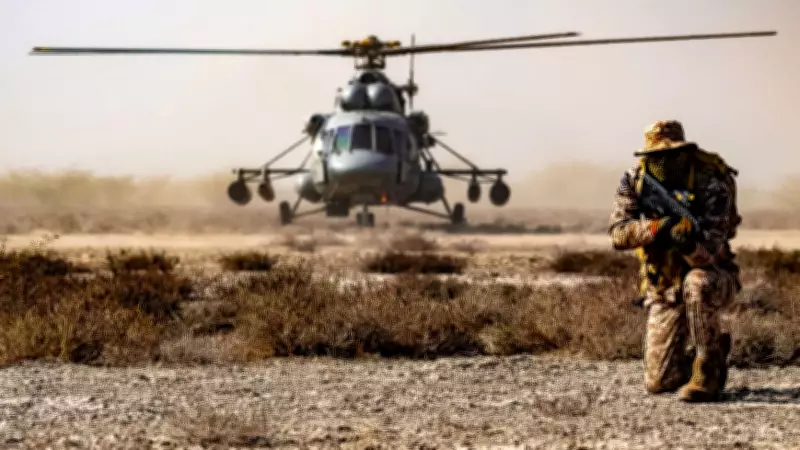
These missions typically involve multiple aircraft working in concert. "A CSAR operation is conducted by a primary rescue platform accompanied by escort aircraft. Special Forces personnel are integrated to sanitize the landing area if necessary," another officer noted. A medical team is also embedded to provide immediate care to rescued aircrew, who undergo comprehensive medical evaluations upon return.
Regular Rehearsals and the 'No Man Left Behind' Principle
The IAF routinely rehearses these complex operations, which are unique in their objective: deploying numerous personnel on an extremely dangerous mission to rescue a single individual. These endeavors epitomize the armed forces' unwavering ethos of 'No man left behind,' demonstrating profound commitment to every service member's safety and recovery.






