Czech Deputy Prime Minister Confronts Hillary Clinton in Heated Munich Security Conference Exchange
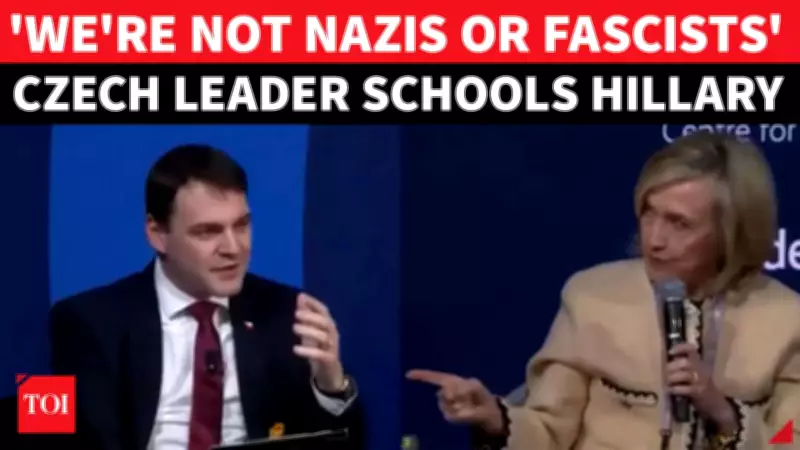
In a dramatic confrontation at the prestigious Munich Security Conference, Czech Deputy Prime Minister and Foreign Minister Petr Macinka delivered a sharp rebuke to former U.S. Secretary of State Hillary Clinton and other Western leaders. The heated debate, which unfolded before an international audience, highlighted deep divisions in global diplomatic approaches.
Macinka Calls for End to Hostile Rhetoric Against Political Opponents
Petr Macinka directly challenged what he described as the dangerous practice of branding ideological opponents as "public enemies." The Czech leader emphasized that such labeling creates unnecessary polarization and undermines constructive political discourse. "We must move beyond this toxic rhetoric that turns every disagreement into a battle between good and evil," Macinka asserted during the session.
The Deputy Prime Minister specifically criticized the casual use of historically charged terms like fascism and Nazism in contemporary political debates. "These were specific historical periods that ended decades ago," Macinka reminded the audience, suggesting that invoking such comparisons diminishes the actual suffering experienced during those eras while poisoning current political conversations.

Clinton Faces Direct Criticism Over Diplomatic Approach
While addressing the conference, Macinka didn't shy away from directly confronting Hillary Clinton's diplomatic legacy and current positions. The Czech leader advocated for what he described as a more measured and respectful approach to international disagreements, particularly regarding sensitive geopolitical issues like the Ukraine conflict and gender policy debates.
The exchange represented a significant moment of dissent within Western diplomatic circles, with a sitting European government official publicly challenging established American and European foreign policy narratives. Macinka's intervention came during broader discussions about how democratic nations should engage with countries and political movements that don't share their ideological perspectives.
Broader Implications for European and Transatlantic Relations
This public disagreement at one of the world's premier security forums signals potential shifts in European political alignments. The Czech Republic, a member of both the European Union and NATO, has occasionally demonstrated independent foreign policy positions that diverge from Western consensus.
The Munich Security Conference has traditionally served as a platform for reinforcing transatlantic unity, making Macinka's critical remarks particularly noteworthy. Observers noted that such public disagreements among Western allies could indicate evolving power dynamics within European politics, especially as countries grapple with multiple simultaneous crises including the war in Ukraine, economic challenges, and political polarization.
Macinka concluded his remarks by advocating for what he called "calmer dialogue" that acknowledges legitimate differences without resorting to demonization. The Czech leader's intervention adds to growing calls within some European circles for a reassessment of diplomatic communication strategies in an increasingly multipolar world.